
Top Reasons to Upgrade Static Billboards Now
A static billboard can hold a good location for years while its commercial potential stands still. For property operators, venue managers and advertising teams, the top reasons to upgrade static billboards usually come down to one practical question: can the site work harder? A full-colour digital screen can carry more campaigns, respond to changing conditions and give audiences a reason to look again, rather than presenting the same message day after day.
The right upgrade is not simply about replacing a printed face with a brighter display. It is about selecting a screen, structure, control system and support package that suit the location, viewing distance, operating hours and revenue model. When those details are considered from the outset, digital billboard investment can improve both on-site communications and long-term commercial returns.
Top reasons to upgrade static billboards for digital
More value from the same prominent location
A traditional billboard generally sells one campaign for one fixed period. Changing it requires new artwork, print production, a site visit and installation work. That process is familiar, but it limits how many advertisers can use the space and how quickly the message can change.
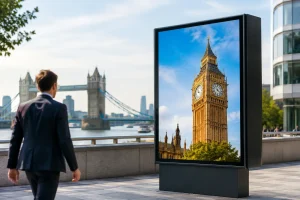
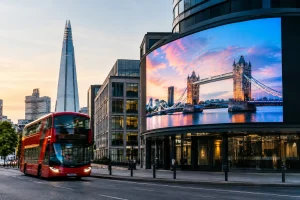
A digital billboard enables multiple advertisers or messages to share a single location. A shopping centre may promote retailers, events, parking information and seasonal campaigns throughout the day. A business park can display occupier communications alongside advertising inventory. In a transport environment, operators can combine commercial content with timely passenger information.
This flexibility can create a clearer route to greater revenue per site, particularly where footfall or traffic is strong. It also gives sales teams a more useful product to offer. Campaigns can be scheduled by time, day or audience profile rather than being tied to a single printed panel for several weeks.
There is a trade-off. Digital inventory needs active sales management and sensible scheduling to achieve its full value. However, even organisations that do not sell third-party advertising often find that the ability to promote their own offers, tenants and services more frequently justifies the change.
Campaigns can change when the opportunity arises
Printed billboard campaigns need lead time. If an event sells out, stock runs low, weather changes or a new promotion is approved, the existing display may no longer be relevant. Digital screens allow authorised users to update content remotely, removing the need for a physical poster change for every new message.
That responsiveness matters in sectors where conditions change quickly. Leisure venues can promote last-minute availability. Retail centres can support bank holiday trading hours. Property managers can communicate important visitor guidance. Advertising operators can make better use of short campaign windows without the cost and delay of producing replacement print.
Remote content management should still be governed properly. Clear approval processes, tested artwork specifications and user permissions help protect brand standards and avoid incorrect information appearing on screen. A dependable supplier will discuss software, connectivity and operational responsibilities before installation, not after commissioning.
Brighter, more engaging communication
Movement, colour and changing creative naturally attract more attention than a fixed printed message. Used well, short animations and high-quality visual content can make a display feel current without becoming distracting. This is particularly valuable in busy commercial locations where audiences are exposed to many competing messages.
Digital does not mean every advert needs fast motion or constant change. In fact, readable copy, strong contrast and a clear call to action often perform better than complicated creative. Screen brightness, pixel pitch, viewing angle and dwell time all affect what an audience can realistically absorb.
For an outdoor roadside site, drivers need simple messaging that can be read safely at speed. In a shopping centre or leisure venue, where people may be walking or waiting nearby, more detailed promotions and video content may be appropriate. A bespoke approach ensures the display is specified for the way people actually use the space.
Reduce print, installation and campaign change costs
Static billboards have recurring costs that can be easy to overlook: artwork adaptation, printing, transport, fitting crews and the disposal of outdated materials. A digital screen has an upfront capital cost and ongoing energy use, but it can reduce many of those repeated costs over its working life.
The financial case depends on campaign frequency. A site that changes creative only once or twice a year may have a different return profile from a high-footfall venue with weekly promotions or multiple advertisers. It is therefore worth modelling expected campaign changes, advertising revenue, maintenance requirements and energy consumption rather than relying on headline figures alone.
Digital content also helps reduce physical waste from replaced vinyl and paper campaigns. For organisations with environmental targets, this can be a meaningful operational benefit, provided the display is selected for efficiency and maintained properly over the long term.
Make better use of dayparts and local audiences
The value of an audience is rarely the same at every hour. A commuter location may have its strongest opportunity in the morning and early evening. A retail destination may need different messaging at weekends. A leisure site may come alive before performances, matches or evening events.
Digital scheduling lets operators tailor content to these patterns. A café can advertise breakfast in the morning, lunch offers at midday and delivery options later in the day. A retail centre can prioritise different tenants at different times. This is not just a creative advantage: it makes advertising packages more relevant and potentially more saleable.
Location-specific content can also strengthen the visitor experience. Directions, event reminders, safety notices and travel updates can be given appropriate priority alongside commercial messages. The result is a display that serves the site, rather than simply occupying it.
Improve control across one site or many
For multi-site operators, static campaigns often involve separate print runs, delivery schedules and fitting arrangements at each location. Digital signage can bring greater consistency by allowing centrally managed content to be deployed across a network, while retaining the option to include local messages where needed.
This is especially useful for commercial property portfolios, retail groups and transport operators. Brand teams can maintain campaign control, while local managers can be given limited access for approved site information. A well-planned system balances central oversight with practical day-to-day use.
Reliability is vital here. A screen is a public-facing asset, so an installation must be built around suitable components, secure connectivity and realistic maintenance access. UK weather, exposure to sunlight, site power arrangements and structural considerations all need proper attention. Choosing equipment on price alone can prove expensive if downtime affects advertising commitments or public information.
Modernise the site without compromising on quality
A tired printed billboard can make an otherwise well-managed property or venue feel dated. A carefully designed digital display can provide a visible improvement while giving the owner a platform that will remain useful as campaigns and business needs evolve.
However, not every static billboard should automatically become digital. Planning requirements, local restrictions, available power, nearby residents, traffic safety and the quality of the location must all be assessed. In some cases, a static format remains the most appropriate and cost-effective solution. The aim is to make a sound commercial decision, not force a technology into an unsuitable setting.
This is where an experienced, hands-on survey and consultation process makes a difference. LEDsynergy Billboards works with clients to consider screen format, brightness, structure, installation and aftercare as parts of one complete project. Getting the specification right first time helps reduce risk and gives decision-makers confidence that the finished display will perform as intended.
What a successful upgrade should include
The strongest projects begin with the commercial objective. Is the priority to sell advertising space, improve visitor communications, promote tenants, support events or achieve a combination of these goals? That answer informs the screen size, resolution, content plan and likely payback period.
It should be followed by a proper site assessment. Viewing distances, sightlines, ambient light, mounting options, power supply, network connectivity and access for installation and service all influence the final design. For outdoor installations, weather protection and structural engineering are not optional details. They are fundamental to dependable operation.
Finally, think beyond the commissioning date. Staff need a straightforward way to manage content, and the asset needs warranty cover, responsive support and a maintenance plan suited to its environment. A digital billboard is most valuable when it remains bright, available and easy to operate year after year.
A well-specified digital screen gives a valuable location more than a fresh appearance. It gives the people responsible for that location the freedom to communicate, promote and respond with far greater purpose – while retaining the reassurance of a system designed to do the job properly.

I would recommend LED Synergy to anyone considering purchasing an LED sign. We have had so many compliments since it was installed and it has been a valuable asset.
Tom Hughes
OSI Food Solutions