
How to Budget LED Display Projects Properly
A digital screen can look straightforward on a plan and become far more complex once it reaches the site. That is why understanding how to budget LED display projects properly matters early. The headline screen price is only one part of the picture. The real budget has to account for structure, power, access, control systems, installation, compliance and the practical realities of operating the display for years, not months.
For most buyers, the challenge is not simply finding the lowest number. It is setting a realistic budget that matches the screen’s purpose, the site conditions and the commercial return expected from it. A cheap figure at enquiry stage often becomes expensive later if the specification is wrong, the installation is under-scoped or the ongoing support has been overlooked.
How to budget LED display projects without missing key costs
The best place to start is with the job the screen needs to do. A roadside advertising billboard, an internal retail display and a large-format transport screen may all use LED technology, but their budgets are shaped by very different demands. Brightness levels, viewing distance, weather exposure, operating hours and content requirements all influence cost.
If the objective is to attract passing traffic at speed, the budget should prioritise visibility, structural suitability and reliable remote management. If the screen is designed to engage visitors at close range, pixel pitch and image detail may matter more. In other words, budgeting starts with application, not just dimensions.
This is also where experienced consultation saves money. A screen that is over-specified wastes capital. One that is under-specified can fail commercially because it never performs as intended. Getting the brief right first time is usually the most cost-effective route.
Start with the display specification
The screen itself will naturally be the largest budget line, but even here the price varies for sensible reasons. Size is the obvious factor, yet resolution, pixel pitch, cabinet design, front or rear access, brightness output, environmental protection and control hardware all shape the final figure.
Outdoor systems generally require a higher budget than indoor systems because they must withstand the British weather, manage heat, deliver higher brightness and maintain performance across changing conditions. A bespoke display may also cost more than a standard format, but that does not automatically make it poor value. If a custom-built system fits the site properly and simplifies installation or maintenance, it can reduce whole-life cost.
There is a trade-off to manage here. Buyers sometimes focus heavily on pixel pitch because it sounds like the quality decision. In reality, the correct pitch depends on viewing distance. Paying for a much finer pitch than the audience will ever appreciate is not prudent budgeting.
Allow for the supporting structure and site works
One of the most common reasons projects exceed budget is that the support requirements were treated as separate or secondary. They are not. An LED display needs a suitable mounting solution, whether that is a steel structure, wall fixing arrangement, gantry integration or a bespoke support frame.
Ground conditions, wind loading, access restrictions and local site constraints all affect cost. A freestanding outdoor billboard may require foundations, civil works and traffic management. A wall-mounted screen may need structural assessment and reinforcement. None of these elements are optional, and all should be part of the budget conversation from the outset.
This is particularly important for older properties, busy retail locations and transport environments where installation windows are tighter and compliance standards are more demanding. A realistic budget reflects how the site behaves in the real world, not just how it looks on a drawing.
Budget for installation, not just equipment
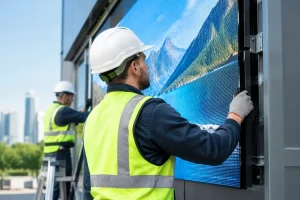
Installation is often underestimated because buyers assume it is largely labour. In practice, installation costs reflect planning, access equipment, lifting operations, electrical works, commissioning and site coordination. If the screen is large or installed at height, crane hire and specialist access can become significant budget items.
There can also be timing considerations. Night works, restricted trading hours, possession periods and multi-contractor coordination can all increase cost, but they may be necessary to complete the project safely and with minimal disruption. A proper budget should leave room for the installation method the site actually requires.
Commissioning should also be included, not treated as an afterthought. The screen needs to be tested, calibrated and configured so it performs correctly from day one. That includes brightness settings, content playback checks, connectivity and system handover.
Power, connectivity and control systems
Many LED display projects depend on infrastructure that sits behind the screen and is easy to forget at budget stage. The display needs a suitable power supply, and depending on location, that may involve distribution upgrades, cable runs, isolators or additional electrical works.
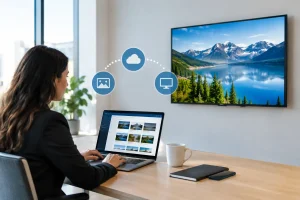
Connectivity matters too. If the screen will be updated remotely, monitored off-site or integrated with a wider signage network, the budget should include the right communications setup. That might involve wired network connections, 4G or 5G hardware, routers, VPN arrangements or software platform costs.
Control systems also deserve careful thought. The cheapest playback option may be perfectly adequate for a single internal display with simple scheduling. It may be the wrong choice for a revenue-generating outdoor advertising screen where reliability, proof of play and remote diagnostics are important. Good budgeting weighs the operational need, not just the upfront price.
Content, software and day-to-day use
A technically excellent screen still needs usable content. For some organisations, content creation is handled in-house. For others, it becomes an additional budget item that needs planning from the start. If the display is intended for advertising revenue, brand campaigns or public information, content workflows should be realistic and properly costed.
Software licensing is another area that can be missed. Some projects need only basic scheduling. Others require campaign management, multiple user permissions, live data feeds or integration with third-party systems. These are not hidden costs so much as essential operating costs, and they should be treated as such.
It is also wise to consider energy use in practical terms. LED displays are efficient for their category, but larger high-brightness outdoor screens still consume meaningful power. Usage hours, brightness management and environmental conditions all influence running costs. A well-specified system can help control this, but electricity should still sit within the wider financial model.
Build maintenance and support into how to budget LED display projects
Long-term support is where disciplined budgeting protects the investment. Any business buying a commercial LED display should ask not only what it costs to install, but what it costs to keep operating reliably. Warranty terms, service response, spare parts strategy and remote diagnostics all affect the real ownership cost.
The lowest purchase price can become less attractive if faults take too long to resolve or support is fragmented between multiple suppliers. For most commercial sites, downtime has a cost. It can mean lost advertising revenue, weaker visitor communication or reputational damage where the screen is highly visible.
A stronger approach is to budget for planned support from the outset. That may include inspection visits, cleaning, preventative maintenance and access to technical help when required. A supplier with genuine project ownership from design through to aftercare can often reduce both risk and disruption over the life of the screen.
Set a budget range, not a single figure too early
At early enquiry stage, it is sensible to work with a range rather than force a fixed number before the site and specification are understood. A budget range allows room to compare options sensibly. For example, you may review a standard display format against a bespoke build, or weigh a finer pitch against a larger screen area depending on the audience and commercial objective.
This avoids a common mistake: setting an unrealistic cap before the technical scope is known, then trying to make the project fit by stripping out essential elements. The better route is to establish the must-haves, identify the variables and test where value really sits.
For procurement teams, this also helps when comparing proposals. A lower quote may exclude structure, software, commissioning or support, while a higher quote includes the full delivered system. The numbers only become meaningful when the scope is aligned.
Questions worth asking before you sign off the budget
A reliable budget usually comes from asking practical questions early. What is the screen for, and how will success be measured? What are the site constraints? Is the structure included? What power and connectivity are needed? Who is responsible for installation, commissioning and aftercare? What level of maintenance is realistic for the environment?
Those questions are not there to complicate the project. They are there to make sure the budget reflects the actual requirement rather than an optimistic assumption. In our experience, the most successful projects are not always the cheapest at the outset. They are the ones specified properly, installed properly and supported properly.
If you are budgeting for a new LED display, treat the project as an operational asset rather than a single line-item purchase. That mindset usually leads to better decisions, fewer surprises and a display that earns its place long after installation day.

I would recommend LED Synergy to anyone considering purchasing an LED sign. We have had so many compliments since it was installed and it has been a valuable asset.
Tom Hughes
OSI Food Solutions