
7 Digital Out of Home Trends Shaping DOOH
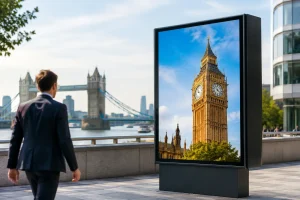
A screen outside a retail park, transport hub or leisure venue now has to do more than simply look bright. Buyers are under pressure to justify spend, keep sites modern, generate revenue and choose systems that will keep performing for years. That is why digital out of home trends matter far beyond the marketing department. They now influence property strategy, customer experience, operational communications and long-term asset value.
For UK organisations investing in public-facing displays, the real shift is not just from static to digital. It is from one-size-fits-all hardware to smarter, more site-specific systems that combine visibility, reliability and commercial flexibility. The businesses getting the best results are not chasing novelty for its own sake. They are choosing digital screens that suit the environment, the audience and the operational demands of the site.
The digital out of home trends worth watching
Some trends come and go quickly. Others change how sites are designed, how campaigns are sold and how screens are specified from the outset. In digital out of home, the strongest trends are practical ones. They affect uptime, content relevance, energy use, maintenance planning and return on investment.
What follows is not a list of fashionable features. It is a closer look at the developments that are shaping how UK buyers approach digital billboard and display projects today.
1. Bigger focus on site-specific design
One of the clearest digital out of home trends is the move away from standardised thinking. Buyers are becoming more cautious about off-the-shelf screens that look fine on paper but are not quite right for the location. A roadside billboard has different viewing distances, ambient light levels and structural demands from a shopping centre entrance or a business park gateway.
That sounds obvious, but it changes procurement decisions. Instead of asking only about pixel pitch or headline brightness, more buyers are asking how a screen will work at their exact site, how it will be mounted, what the local environment demands and how service access will be handled later. That is a healthier approach because it reduces expensive compromises after installation.
For property operators and facilities teams, bespoke design often delivers better whole-life value than a cheaper standard product. The initial spend may be higher, but if the screen is built properly for the environment, it is more likely to perform consistently and avoid preventable maintenance issues.
2. Content is becoming more dynamic and context-led
The best DOOH campaigns are no longer treated as static posters on an electronic surface. Content is increasingly planned around time of day, audience flow, local events and commercial priorities. A retail destination may promote breakfast offers in the morning, leisure activity in the afternoon and dining in the evening. A transport environment may shift messaging according to commuter peaks, service updates or seasonal demand.
This trend has implications for hardware as well as creative. Screen quality, brightness control, content management and connectivity all play a part in whether dynamic campaigns work smoothly in practice. Buyers who only focus on the display face can miss the importance of the software and operational side of the project.
There is also a trade-off here. More dynamic content can improve relevance and revenue potential, but it also requires discipline. If internal teams or media owners cannot manage content changes reliably, a simpler schedule may be more effective. The technology should support the business model, not complicate it.
3. 3D and anamorphic displays are raising expectations
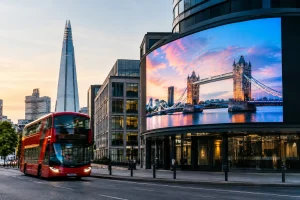
High-impact 3D billboard content has attracted plenty of attention, and for good reason. When done properly, it creates a memorable visual effect that can stop people in their tracks and generate wider social sharing. For landmark sites and premium locations, it can become part of the destination itself.
But this is where experience matters. Not every site is right for a 3D screen, and not every business needs one. The effect depends on viewing angles, screen configuration, surrounding architecture and content quality. If those elements are not properly considered, the result can feel forced rather than impressive.
For some operators, the lesson is not that every screen should be 3D. It is that audiences are expecting stronger visual impact from digital displays overall. Even standard full-colour screens are now being judged more critically on image quality, contrast, consistency and presentation. A poor digital screen is more noticeable than ever.
Why buyers are prioritising reliability over novelty
For all the interest in creative formats, one of the most important digital out of home trends is actually quite straightforward. Buyers want dependable systems backed by proper support. A screen that regularly fails, loses brightness consistency or becomes difficult to maintain is not an innovation. It is an operational problem.
This is especially true in transport settings, roadside environments, retail estates and other demanding locations where downtime is highly visible. Procurement teams are looking more closely at component quality, cabinet design, weather resistance, front or rear access requirements and aftercare support. They are also asking sensible questions about who will install the system, who will commission it and who will respond if something goes wrong.
That shift is good for the market. It encourages more informed investment and moves the conversation beyond headline specifications. Long-term value comes from a screen that is fit for purpose, supported properly and designed to keep delivering.
4. Smarter use of data is shaping content planning
Data-led DOOH is no longer reserved for the biggest media networks. More site operators and advertisers are using audience patterns, dwell time, weather inputs and footfall trends to shape content schedules and sales strategies. In practical terms, that means screens can become more commercially responsive.
For example, a venue with strong lunchtime traffic may package advertising slots differently from one with evening peaks. A shopping centre may use screen time to balance third-party advertising with its own promotional messaging. A business park may prioritise wayfinding and occupier communications during key periods while maintaining space for advertising revenue.
The important point is that data should help buyers make better decisions, not create unnecessary complexity. Some sites will benefit from sophisticated scheduling. Others simply need reliable proof of audience value and enough flexibility to keep messaging fresh. It depends on the environment and on who will be managing the screen day to day.
5. Energy performance and efficiency are under closer scrutiny
Rising energy costs and wider sustainability targets are having a direct impact on screen specification. Buyers are asking tougher questions about power consumption, brightness management and efficient component design. That is not just about corporate responsibility. It is a budget issue.
Outdoor displays still need enough brightness to perform in changing light conditions, but there is growing interest in systems that manage output intelligently rather than running harder than necessary at all times. Over the life of a screen, those choices can make a meaningful difference to operating costs.
Again, there is a balance to strike. Cutting specification too far in the name of efficiency can undermine visibility and commercial performance. The better approach is to choose a well-engineered system that delivers the required impact without avoidable waste.
6. Multi-use screens are becoming more attractive
Another of the more practical digital out of home trends is the rise of displays that serve more than one purpose. A screen may carry paid advertising, support tenant communications, promote on-site events and provide public information depending on the setting.
This is particularly relevant in mixed-use developments, shopping centres, leisure destinations and transport environments, where a single digital asset can support both commercial and operational goals. For buyers, that makes the business case stronger. The screen is not relying on one narrow function to prove its worth.
It also means planning needs to be done properly from the beginning. If multiple stakeholders will use the screen, the content workflow, access permissions and scheduling rules should be agreed early. Otherwise, the flexibility that makes the screen valuable can become a source of internal friction.
What these trends mean for your next project
The main lesson is simple. The most effective screen projects begin with the site and the objective, not with a catalogue page. Whether the aim is to monetise footfall, improve the look of a property, modernise customer communications or create a flagship visual statement, the specification should reflect that goal from the start.
This is where a consultative approach proves its value. A buyer who is guided through survey, design, installation, connectivity and support is far more likely to end up with a system that performs properly and remains cost-effective over time. That has always mattered, but the current pace of change in DOOH makes it even more important.
For businesses reviewing digital display investment now, the strongest move is not to chase every new feature. It is to choose a solution that is technically sound, commercially sensible and tailored to the demands of the environment. Companies such as LEDsynergy Billboards have built their reputation on exactly that principle – getting the solution right first time.
The screens that stand out over the next few years will not just be the brightest or the most talked about. They will be the ones that keep working hard for the site, the operator and the audience long after the launch day excitement has passed.

I would recommend LED Synergy to anyone considering purchasing an LED sign. We have had so many compliments since it was installed and it has been a valuable asset.
Tom Hughes
OSI Food Solutions