
Billboard Automation for Better Campaign Control
A digital billboard should not require somebody to be on site every time a campaign changes. For a retail park promoting weekend offers, a transport operator sharing live service messages, or a venue selling advertising space, billboard automation turns the screen from a fixed asset into a managed communications channel. The aim is not simply to put content on a timetable. It is to make sure the right message appears on the right screen, at the right time, with proper oversight.
For organisations investing in high-visibility LED displays, that control has direct commercial and operational value. It can reduce manual workload, support more flexible advertising packages and help teams respond quickly when circumstances change. Yet automation only works well when it is specified around the site, the audience and the people who will run it.
What billboard automation actually means
Billboard automation is the use of digital signage software, network connectivity and pre-set rules to schedule, publish and monitor content on electronic billboard screens. Rather than sending a member of staff to update a display manually, authorised users manage campaigns through a central platform.
A basic setup may schedule a loop of adverts for defined dates and times. A more advanced system can assign different content to different sites, adjust messages by time of day, trigger content from external data sources or provide proof that a campaign played as booked. The appropriate level depends on the operation. A single leisure venue has very different requirements from a property group managing screens across several locations.
Automation should also support, rather than replace, good campaign management. Someone still needs to approve artwork, set commercial rules, check screen performance and retain control over urgent messages. The value lies in removing repetitive tasks while keeping accountability clear.
Where automation creates the strongest return
The clearest benefit is speed. Marketing teams can prepare seasonal promotions, event messaging and tenant advertising in advance, then schedule them to run automatically. This avoids last-minute updates and makes campaign delivery more consistent across a portfolio.
For screen owners who sell advertising inventory, automation can make a digital billboard more commercially useful. Different advertisers can be allocated defined slots, dayparts and campaign dates without rebuilding a playlist by hand. Morning commuter messaging, lunchtime food offers and evening leisure promotions can all be planned around the people most likely to see them.
There is also an operational advantage. Facilities and site teams do not need to become signage specialists simply to make routine content changes. With sensible user permissions, marketing teams can manage approved content while technical teams retain control of system settings. That division reduces avoidable errors and gives each team a clearer role.
Automation is especially useful where information must change promptly. In transport environments, for example, display priorities may need to shift when there is disruption. In shopping centres, a screen may move from brand advertising to safety or customer guidance when needed. The system should allow an authorised user to override scheduled content immediately.
Scheduling needs commercial rules, not just a calendar
A timetable alone does not protect the value of a screen. If several advertisers have booked campaigns, the platform needs rules that prevent clashes, preserve agreed play frequency and make it easy to see what is due to run. This matters most where advertising revenue is involved, because a missed or incorrectly scheduled campaign can affect both customer confidence and income.
Before selecting software, establish how campaigns will be sold and measured. Will every advertiser receive equal rotation, or will premium placements receive greater frequency? Are bookings based on a fixed number of plays, a share of voice or particular dayparts? Will one local team manage content, or will tenants and agencies need limited access?
These decisions shape the workflow. A good process normally includes artwork submission, content approval, scheduling, publication and confirmation. It should be simple enough for day-to-day use, but structured enough to stop unsuitable or expired content appearing on a public screen.
Dayparting makes messages more relevant
Dayparting is the scheduling of content around predictable audience patterns. It is one of the most practical uses of automated billboard management. A business park may prioritise visitor information and breakfast offers in the morning, then promote nearby food, retail or services later in the day. A leisure destination may focus on family activity during the day and entertainment or dining in the evening.
It is not a guarantee of better campaign results. Creative quality, screen location and audience volume still matter. But dayparting gives advertisers a more considered proposition than the same message running at every hour, and it can help site operators package inventory more effectively.
The screen and network must be designed for the job
Automation depends on reliable physical infrastructure. A high-quality LED billboard, properly specified controller and appropriate connectivity are as important as the software that sits behind them. If the screen is poorly suited to its environment, an automated content plan will not solve visibility, weather protection or maintenance problems.
Outdoor installations need careful consideration of brightness, viewing distance, pixel pitch, structural requirements and exposure to weather. Indoor screens may require a different balance of resolution, brightness and cabinet design. In either case, the display must be engineered for long operating hours and practical service access.
Connectivity should be considered at survey stage, not treated as an afterthought. The site may use fixed broadband, a managed mobile connection or another secure network arrangement. What matters is stable access, clear ownership and a realistic plan for outages. A screen should continue to play its last approved content if the connection drops, rather than going blank.
Remote monitoring is equally valuable. It allows the operator or support team to identify issues such as lost communication, abnormal temperature or playback faults before they become a prolonged public-facing problem. Automated alerts can shorten response times, but they should be backed by people who understand the installation and can take responsibility for resolving it.
Build in approvals and emergency control
Public displays carry reputational risk. Content may be viewed by customers, staff, tenants and the wider community, so automation needs sensible safeguards. User permissions should match responsibilities, with access restricted for anyone who only needs to upload artwork or request campaign changes.
An approval stage is particularly useful for multi-tenant venues and advertising-funded networks. It gives the screen owner a chance to check content against brand standards, technical requirements and any site restrictions before it is published. This is not unnecessary bureaucracy. It is a straightforward way to prevent poor-quality creative, incorrect dates or inappropriate material appearing on a prominent display.
Emergency messaging needs its own priority setting. Whether the requirement is a safety notice, a weather warning, a traffic instruction or a site closure message, authorised personnel should be able to interrupt the standard schedule. The process must be agreed in advance, including who has authority to activate it and how normal content is restored afterwards.
Reporting turns activity into evidence
For advertisers, the question is often not whether content was uploaded but whether it played as agreed. Automated reporting can provide proof-of-play records showing dates, times and display locations for campaign activity. This is helpful for invoicing, client reporting and internal accountability.
Reporting does have limits. Proof of play confirms that content was delivered to the screen, not how many people noticed it or acted on it. Footfall data, sales activity, promotion codes and audience research may provide a fuller picture where campaign measurement is required. Being clear about that distinction builds trust with advertisers and stakeholders.
For operators, reports can also reveal how the screen is being used. They may highlight unused dayparts, repeat bookings, content that is nearing expiry or locations where demand is strongest. Over time, that information can inform pricing, sales packages and future investment decisions.
Choosing the right level of billboard automation
Not every site needs a highly complex platform. A single billboard with occasional updates may benefit most from dependable remote publishing, straightforward scheduling and responsive support. A multi-site operator selling advertising space may need centralised control, user permissions, reporting and more detailed campaign rules.
The trade-off is between capability and manageability. A system with every possible feature can create unnecessary training demands if the team only needs a clear, reliable way to schedule content. Conversely, choosing a basic system for a growing media network can lead to workarounds and limited commercial control later on.
This is why consultation and site planning matter. The display, software, connectivity and service model should be considered as one solution. LEDsynergy Billboards approaches projects in that way, combining bespoke screen manufacture with installation, commissioning and practical support for the people responsible for the finished system.
The most effective automated billboard is not the one with the longest feature list. It is the one that lets your team run campaigns confidently, protects the reliability of your display and gives every booked message a proper chance to be seen.
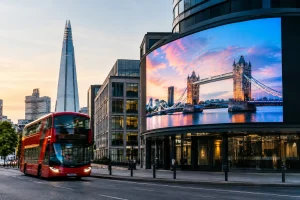

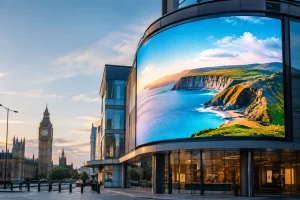
I would recommend LED Synergy to anyone considering purchasing an LED sign. We have had so many compliments since it was installed and it has been a valuable asset.
Tom Hughes
OSI Food Solutions