
A Guide to Transport Display Integration
A missed platform change, a diverted bus or a crowded concourse can alter a passenger’s decision in seconds. A well-planned digital display gives people the information they need at the point they need it, while creating valuable space for advertising and venue communications. This guide to transport display integration explains the practical decisions that help operators, property owners and commercial teams specify a system that performs reliably long after installation.
Transport environments are demanding. Screens must remain visible in changing daylight, withstand continual public use and fit around operational systems that cannot simply be taken offline. The best results come from treating the display as part of the wider passenger environment, not as a screen added at the end of a refurbishment.
Start with the passenger journey and commercial aim
Before discussing pixel pitch, screen size or software, establish what the display must achieve. A rail station may need clear real-time departure information at entrances and platforms. A bus interchange may prioritise service alerts, wayfinding and safety messages. At a transport hub, advertising inventory can help generate revenue, but it should not compromise essential passenger information.
Map where people arrive, pause, queue and make choices. Entrances, ticket halls, platform approaches, waiting areas, forecourts and car parks each create different viewing conditions. A display placed above a busy concourse may be seen from a considerable distance, whereas a screen at a ticket gate is usually read at close range. Both may be valuable, but they require different specifications.
It also helps to agree content priorities early. Most operators need the ability to interrupt scheduled advertising with operational notices, emergency messaging or major service updates. This should be defined in the display strategy and reflected in the content management system, user permissions and approval process.
Specify the right screen for the location
A transport display is only effective when the hardware suits its surroundings. Indoor screens in a sheltered ticket hall face very different conditions from an outdoor roadside or platform installation. The latter may be exposed to direct sunlight, driving rain, pollution, vibration and wide temperature changes.
Brightness is a central consideration. An outdoor LED screen must remain legible in bright daylight, while an overly bright indoor screen can be uncomfortable for passengers and disruptive in low-light periods. Automatic brightness control can adjust output to ambient conditions, reducing unnecessary power use and improving viewing comfort.
Pixel pitch should be selected according to viewing distance, content type and available budget. A finer pitch can show detail at close range, but it is not automatically the correct choice for a large-format display viewed across a carriageway or concourse. Spending on resolution that the audience cannot perceive is rarely cost-effective. Conversely, a coarse pitch can make text and timetable information difficult to read where passengers stand nearby.
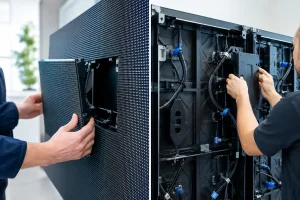
Screen orientation, cabinet design and service access deserve equal attention. Portrait screens can suit wayfinding and vertically formatted advertising, while landscape formats work well for departure boards, route updates and broad creative campaigns. Where possible, engineers should be able to access components safely without closing a key public route or requiring disproportionate equipment.
Build for visibility, safety and longevity
Transport sites are working environments, not controlled showrooms. The proposed enclosure, fixings, glazing, ventilation and electrical components should be selected for the particular site. Outdoor systems need appropriate weather protection, while public-facing installations may require additional impact resistance and tamper-conscious design.
Structural surveys are essential for wall-mounted and freestanding displays. The supporting structure must accommodate the screen’s weight, wind loading and maintenance requirements. Planning consent, landlord approval, highways considerations and local advertising rules can also affect location, size and operating hours. Addressing these matters during the survey stage prevents expensive late changes.
Accessibility should form part of the specification, rather than being considered after the display is installed. Text size, contrast, dwell time and the placement of critical information all influence whether a screen genuinely serves a broad public audience. Where audio, tactile signage or other accessible communications are used on site, digital displays should complement them.
Plan connectivity before the installation date
The physical screen is only one part of transport display integration. Reliable content delivery depends on a suitable network connection, sensible system architecture and clear responsibility for ongoing management.
Some sites have an existing wired network that can support displays, while others require dedicated broadband, mobile connectivity or a private network arrangement. Wired connections are often preferable for fixed, high-priority screens, but each site must be assessed on its merits. Network coverage, data requirements, security policies and the route for cabling can all influence the final approach.
Critical passenger information should not depend on a fragile or poorly understood connection. Discuss what the screen should do if a data feed or network connection fails. For example, it may show a clearly labelled fallback message, a static timetable, safety information or approved local content until the live feed returns. The right choice depends on the service and operational risk.
Cyber security matters as much as physical security. User accounts should be controlled, passwords managed properly and remote access limited to authorised personnel. The content management platform should allow defined roles, so that a local team can update planned messages without having unrestricted access to operational settings. A supplier should be open about how remote support, software updates and device monitoring are handled.
Integrating live data and content management
Transport screens are often most useful when they can receive live information from timetabling, passenger information or disruption-management systems. Integration can range from simple scheduled content updates to automated feeds that display arrivals, departures, routes and service changes.
The key question is not simply whether a platform can accept a feed. It is whether the information appears in a clear, dependable format that staff can manage when exceptions occur. Data sources may use different formats, refresh at different intervals or contain inconsistent naming conventions. These details need testing before launch, particularly where live operational information is displayed alongside advertising.
A good content management system should make everyday scheduling straightforward. Teams may need to target messages by location, time of day or screen group, then confirm that campaigns have played as intended. For commercial advertising, reporting expectations should be agreed at the outset, including proof of play, campaign schedules and the procedure for replacing unsuitable or time-sensitive creative.
Keep content rules practical. Service information needs high contrast and sufficient time on screen to be read. Advertising should be designed for the screen’s dimensions and the likely viewing distance, not repurposed blindly from a mobile or print campaign. Motion can attract attention, but excessive movement near crossings, vehicle routes or operational signs may be inappropriate.
Deliver the project in manageable stages
Transport sites often have restricted working hours, public access constraints and little tolerance for disruption. A detailed installation plan should cover surveys, fabrication, civils, electrical works, network provision, lifting equipment, access permissions and commissioning. It should also identify who will coordinate with site management, contractors and relevant authorities.
Phased delivery is often the sensible route for a multi-site estate. Installing a pilot display or a first group of screens can confirm content workflows, network performance and operating procedures before the wider roll-out. This can add time at the start, but it reduces the chance of repeating a design issue across dozens of locations.
Commissioning should be more than switching the screen on. It should verify brightness settings, content playback, live data feeds, remote monitoring, failover behaviour and electrical safety. Site staff should receive clear training on routine content changes, escalation routes and basic checks they can carry out before requesting support.
Make maintenance part of the investment case
The lowest purchase price does not always produce the lowest cost over the working life of a display. Energy use, replacement parts, access equipment, software provision and support response times all affect the total cost of ownership. This is particularly relevant where a failed screen leaves passengers without information or removes a revenue-generating advertising location from service.
Ask prospective suppliers how they approach fault diagnosis, spare parts and planned maintenance. A system with remote monitoring can identify issues early, but it does not replace a clear support arrangement and accountable engineers. It is also worth confirming warranty terms, expected component availability and who owns responsibility for content, connectivity and hardware once the installation is complete.
British-built, bespoke systems can offer practical advantages when dimensions, mounting arrangements or operational requirements fall outside standard formats. LEDsynergy Billboards approaches these projects with site surveys, tailored manufacturing, installation and ongoing support in mind, helping clients make decisions that fit both the location and the budget.
The most useful transport display is one that passengers barely need to think about. It is visible when they look up, clear when plans change and dependable when the site is under pressure. Begin with the real journey through the space, then choose the technology and support model that will keep serving it properly.

I would recommend LED Synergy to anyone considering purchasing an LED sign. We have had so many compliments since it was installed and it has been a valuable asset.
Tom Hughes
OSI Food Solutions