
7 Top Uses for 3D Billboards
A well-placed 3D billboard can stop people in their tracks for a reason simple static signage cannot – it creates a moment. Not just visibility, but genuine attention. For organisations weighing up the top uses for 3D billboards, the real question is not whether the format looks impressive. It is where that impact translates into commercial value, operational sense and a dependable long-term installation.
That matters because 3D LED advertising screens are not a novelty purchase. They are a strategic display investment. The best results come when the screen format, site conditions, content plan and audience behaviour are considered together, rather than treating 3D as a bolt-on feature.
Where the top uses for 3D billboards deliver most value
The strongest applications tend to share one thing: high dwell time or high visibility in locations where people are already primed to notice their surroundings. In those settings, 3D content works hard because it interrupts familiar visual patterns and gives viewers something worth pausing for.
That does not mean every site needs a dramatic illusion effect running all day. In practice, 3D billboard performance depends on the viewing angle, ambient light, traffic flow and the quality of the LED screen itself. A clever concept on the wrong structure can underperform. A well-engineered installation in the right location can become a genuine asset.
1. Retail and shopping centre promotions
Retail is one of the clearest answers when clients ask about top uses for 3D billboards. Shopping centres, retail parks and flagship storefronts all depend on attention, footfall and urgency. A 3D display can showcase a product launch, seasonal campaign or limited-time promotion in a way that standard posters simply cannot match.
This is particularly effective where people are already in browsing mode. Fashion, beauty, consumer electronics and food brands all benefit from visual depth and movement because the product itself becomes part of the spectacle. A trainer appearing to step out from the screen, a fragrance bottle rotating in space, or a food campaign with layered motion can create immediate social appeal as well as on-site engagement.
The trade-off is that retail content needs refreshing regularly. If the creative remains static for too long, the surprise factor fades. For shopping environments, a strong scheduling plan matters almost as much as the hardware.
2. City-centre brand campaigns
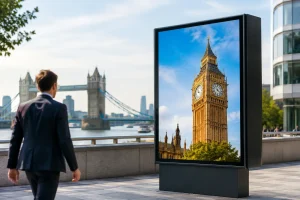
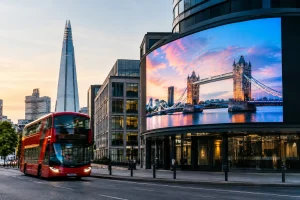
For national brands and media owners, city-centre 3D billboards are often used to create standout campaign moments. These are the large-format installations that turn a busy junction or prominent building frontage into a destination in its own right.
In this setting, 3D is less about detailed product information and more about memorability. If a campaign needs public attention, press coverage or social sharing, the format can deliver strong reach beyond the people who see it in person. One screen can effectively do the work of both outdoor advertising and digital word-of-mouth, provided the creative is designed properly.
There is, however, a practical point to keep in view. Prime urban sites demand reliable brightness control, structural suitability and careful consideration of planning requirements. The best outcome comes from a display built around the site, rather than trying to force a standard product into a complex environment.
3. Leisure venues and entertainment destinations
Cinemas, arenas, visitor attractions, family entertainment venues and gaming sites are natural homes for 3D displays. Audiences in these environments expect visual stimulation. They are more receptive to immersive formats and more likely to respond positively to spectacle.
That makes 3D billboards useful not only for third-party advertising, but for the venue’s own promotions. Upcoming events, ticketed experiences, food and beverage offers, and sponsorship messages all gain impact when presented in a more dimensional format. In the right entrance plaza or concourse setting, the screen becomes part of the venue experience rather than just a marketing add-on.
This use case also suits operators looking to monetise space. A striking digital asset can support premium ad rates, especially where audience numbers are consistent and dwell time is strong. As always, reliability is central. Leisure environments often run long hours, so the screen and support model need to be built for daily use, not occasional demonstration.
4. Transport hubs and roadside environments
Transport environments can be highly effective, though they require careful judgement. Railway stations, bus interchanges, airport approaches and major roadside locations offer a large captive audience. People are waiting, passing through or sitting in slow-moving traffic, which creates valuable viewing opportunities.
For transport operators and advertisers, 3D billboards can elevate campaigns in spaces that are otherwise crowded with standard messaging. They are particularly useful for wayfinding support, brand partnership zones and premium advertising positions where a conventional flat display would disappear into the background.
The balance here is between impact and clarity. In fast-moving roadside settings, content must remain simple and legible. In station concourses, the screen may need to support both advertising and practical communication. Not every transport site is right for heavy 3D illusion content, but many are right for selective 3D-led campaigns on a high-quality digital screen.
5. Commercial property and mixed-use developments
Property operators increasingly use digital display systems to modernise estates, improve tenant communications and strengthen the profile of a site. In mixed-use developments, office campuses and premium commercial buildings, 3D billboards can help create a more contemporary arrival experience.
This is one of the more overlooked top uses for 3D billboards because the goal is often broader than advertising alone. A screen might be used to welcome visitors, promote occupiers, support placemaking and host paid media in one installation. That flexibility is valuable for landlords and facilities teams who need one asset to serve several commercial functions.
The key is to match specification to environment. External screens in exposed locations need to be engineered for weather resistance, viewing distance and maintenance access. Internal atrium or foyer screens may allow for finer pixel pitch and more detailed visual effects. A bespoke approach tends to produce a better result than an off-the-shelf unit chosen on headline price alone.
6. Product launches and short-term campaign bursts
When a business wants maximum impact around a launch, 3D billboards are hard to ignore. Automotive brands, technology companies, entertainment releases and major retail launches all use the format to create anticipation and a sense of scale.
This works especially well when the product has a clear visual signature. Cars, consumer devices, drinks packaging and character-led promotions all lend themselves to the illusion of depth. If the campaign objective is to be noticed quickly and remembered afterwards, 3D can justify the investment.
That said, launch campaigns need proper lead time. Screen design, content production, structural planning and installation all benefit from early coordination. Rushing the process usually weakens the final result. A technically sound display with average creative will still perform respectably; brilliant creative on a poorly planned installation will not.
7. Multi-site networks looking for premium digital inventory
For organisations managing several venues or estates, 3D billboards can form part of a wider digital signage strategy. Rather than treating a flagship 3D screen as a one-off statement piece, some operators use it as the premium tier within a broader network of standard LED advertising screens.
This is particularly relevant for shopping centre groups, leisure operators and transport estates. One or two standout 3D sites can attract higher-value advertising demand, while the rest of the network delivers supporting reach. From a commercial perspective, that combination can make more sense than trying to turn every display into a specialist feature.
The practical advantage is consistency. If the wider network is built, installed and supported properly, operators gain control over content scheduling, maintenance standards and future upgrades. For buyers focused on lifecycle value rather than just initial cost, that joined-up thinking matters.
What makes a 3D billboard use case succeed
The most successful projects start with the site and the objective, not the effect. A buyer may want a screen that creates a talking point, but the installation still has to perform in real conditions. Viewing angles, structural support, brightness, pixel pitch, software compatibility and maintenance access all affect the outcome.
Content also needs discipline. Good 3D advertising is not simply loud animation. It should be readable, purposeful and designed for the audience’s likely viewing time. In some cases, a restrained 3D effect with strong brand clarity will outperform a more dramatic sequence that confuses the message.
This is where experienced project support makes a real difference. Businesses such as LEDsynergy Billboards work with clients from survey through to installation and commissioning because the right answer is rarely a generic product. It is a solution shaped around the site, the audience and the commercial goal.
A 3D billboard earns its place when it does more than impress for a few seconds. The best installations become reliable working assets – drawing attention, supporting revenue and giving people a reason to look twice.

I would recommend LED Synergy to anyone considering purchasing an LED sign. We have had so many compliments since it was installed and it has been a valuable asset.
Tom Hughes
OSI Food Solutions