
Best LED Screens for Retail Atriums
A retail atrium gives you one chance to command attention before shoppers drift past, look down at their phones, or head straight for the escalator. That is why choosing the best LED screens for retail atriums is rarely about buying the biggest display on offer. It is about selecting a screen that suits viewing distances, ambient light, content demands and the day-to-day realities of a busy commercial environment.
Atriums are some of the most valuable display locations in a shopping centre or mixed-use retail development. They carry high footfall, long sightlines and strong dwell opportunities, but they also present challenges. You may be dealing with glazed roofs, changing daylight levels, complex mounting positions and the need to protect aesthetics as much as advertising performance. A good result comes from matching the screen properly to the space, not forcing a standard product into a specialist setting.
What makes the best LED screens for retail atriums?
The best installations usually share the same strengths. They are bright enough to stay clear in changing light, fine enough in pixel pitch to look sharp from the intended viewing range, and built in a format that complements the architecture rather than fighting against it. Just as important, they are supported by a supplier who understands structural requirements, content management and ongoing maintenance.
For atriums, direct-view LED is often the strongest option because it scales well, handles large-format creative effectively and remains visible in conditions where other technologies can struggle. That said, not every atrium needs the same specification. A small internal mall court with lower ceiling heights may suit a much finer pixel pitch and more modest brightness than a large glazed central void in a regional shopping centre.
This is where buyers can come unstuck. On paper, two screens can appear similar. In practice, cabinet design, service access, control systems, thermal performance and build quality can make a considerable difference to reliability and lifetime cost.
Screen type matters more than headline size
In retail atriums, the discussion often starts with dimensions, but format should come first. A hanging central display, a large wall-mounted screen, a wrapped column display or a double-sided suspended screen all behave differently in use.
A wall-mounted LED screen can be ideal where there is a dominant viewing direction and a clear architectural surface to work with. These installations tend to be easier to integrate and maintain, provided service access is planned from the start. Suspended screens are useful where footfall moves around the display and where a central feature is needed, but weight loading, fixing strategy and viewing angles become more critical.
There are also cases where a bespoke shape is the better commercial choice. Curved or faceted formats can help a screen sit more naturally within a premium retail environment. They can also increase visibility from multiple approaches. The trade-off is that bespoke engineering and installation complexity need to be allowed for properly.
Pixel pitch and viewing distance
If there is one specification that deserves careful attention, it is pixel pitch. In simple terms, this affects how smooth and detailed the image appears at different distances. For retail atriums, a finer pitch is not always automatically better. It depends on where people will stand, how long they are likely to view the content, and how large the display area needs to be.
For screens viewed at relatively close range from balconies, café seating or circulation routes, a finer pitch helps preserve image quality and text legibility. For larger displays intended to be seen from across an open atrium, a slightly wider pitch may provide a more cost-effective result without compromising impact.
This is where practical judgement matters. Spending heavily on a very fine pitch for a long-distance advertising screen may not deliver a proportionate return. Equally, pushing the pitch too far in the name of budget can leave content looking coarse in a premium retail setting. The right answer sits somewhere between performance, budget and the reality of how the screen will be used.
Brightness, glare and daylight control
Atriums often look like indoor spaces on a floorplan but behave more like semi-daylit environments. Roof glazing, shopfront reflections and changing seasonal light can wash out weaker displays. That is why brightness should be assessed against actual site conditions, not assumptions.
The best LED screens for retail atriums are specified with enough brightness to cut through ambient light while still being controllable for evening trading and special events. Too little brightness and content lacks presence. Too much, without proper calibration, and the screen can feel harsh or out of place.
Glare is another consideration. Screen position, viewing angle and surrounding finishes all influence perceived quality. In some locations, a slightly different mounting angle or cabinet treatment can improve the experience far more than simply increasing luminance. A proper site survey is worth far more than relying on brochure figures alone.
Content has a direct effect on specification
Not all atrium screens carry the same job. Some are primarily advertising platforms designed to monetise footfall. Others support wayfinding, event promotion, brand campaigns or a mix of paid and operational messaging. The content plan should shape the hardware decision.
If the screen is showing fast-moving promotional creative, large-format video and bold brand campaigns, the emphasis is on impact, contrast and scale. If it needs to display schedules, directional information or smaller text, image clarity becomes more important. Buyers sometimes focus on the display technology first and only later realise the content requirements demand a different specification.
This is also why software and connectivity deserve early discussion. A strong physical screen is only part of the project. Reliable content delivery, scheduling and remote monitoring all affect how well the investment performs over time.
Installation realities in live retail environments
Atrium projects are rarely straightforward installations. Access can be limited, trading hours can constrain working time, and structural loading may require careful coordination with consultants and site teams. The best solution is not simply the one that looks good in a rendering. It is the one that can be installed safely, maintained sensibly and operated with minimal disruption.
For many property and facilities teams, this is where a specialist supplier adds real value. Bespoke manufacturing, surveyed fixing designs and coordinated installation planning reduce the risk of problems later. In a live retail environment, getting it right first time matters. Delays, rework or awkward service access can become expensive very quickly.
Front serviceability, modular cabinet construction and sensible power and data routing should all be considered early. They are not glamorous specifications, but they have a direct bearing on uptime and maintenance costs.
Reliability should sit high on the shortlist
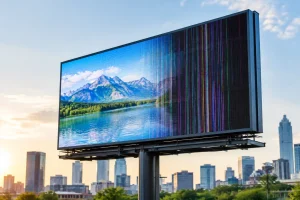
A retail atrium screen is a public-facing asset. If it fails, dims unevenly or develops visible panel issues, the effect is immediate and very noticeable. That is why reliability should carry at least as much weight as visual performance.
This means looking beyond initial purchase price. Ask how the screen is manufactured, what quality control standards are followed, how colour consistency is managed and what support is available after commissioning. Warranty matters, but responsive aftercare matters just as much.
Long-term value usually comes from a screen that performs consistently, is supported properly and remains fit for purpose as content needs evolve. For many buyers, that makes a consultative project-led approach more sensible than selecting a nominally cheaper off-the-shelf system.
Choosing a supplier for the best LED screens for retail atriums
The right supplier should be able to explain why a given specification suits your site, not just supply a price for a screen size. In atrium environments, that includes site survey work, mounting strategy, brightness recommendations, pixel pitch justification, control system advice and realistic maintenance planning.
It should also include honest conversations about trade-offs. There are situations where a double-sided suspended screen is the strongest revenue-generating choice, and others where a single well-positioned wall display is simpler, lower risk and more effective. There are times when a bespoke format is worth the extra investment, and times when it adds complexity without enough commercial benefit.
An experienced manufacturer and installer will guide those decisions with the building, audience and operating model in mind. That is far more useful than a catalogue-led sales process.
For retail operators and property teams, the commercial aim is usually straightforward: attract attention, enhance the environment and generate measurable value from a premium space. Reaching that point takes more than a bright screen. It takes the right design, the right build and proper support behind it. That is why many clients prefer to work with specialist partners such as LEDsynergy Billboards, where manufacturing, installation and aftercare are handled with the same level of accountability.
If you are planning an atrium display, the best place to start is not with a standard product list but with the space itself. When the screen is shaped around the site, the content and the commercial objective, the result is far more likely to perform well for years rather than simply look impressive on day one.

I would recommend LED Synergy to anyone considering purchasing an LED sign. We have had so many compliments since it was installed and it has been a valuable asset.
Tom Hughes
OSI Food Solutions