
What Size Billboard Screen Do I Need?
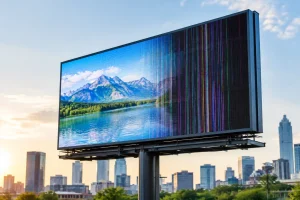
A screen that looks impressive on a drawing can feel underwhelming on site. Equally, a very large display can be the wrong investment if the audience is close, the dwell time is short, or the location simply does not support that footprint. If you are asking what size billboard screen do I need, the right answer starts with how the screen will be viewed, not just how much wall or land you have available.
For most buyers, screen size sits at the point where commercial ambition, planning constraints, engineering and budget all meet. That is why this decision is rarely about choosing a standard dimension from a price list. The most effective billboard screens are sized around the job they need to do, the environment they will sit in and the people who need to see the message clearly.
What size billboard screen do I need for my location?
The first question is simple: who needs to see it, and from how far away? A roadside digital billboard facing fast-moving traffic needs a very different approach from a screen in a retail park, transport hub or leisure venue where people are stationary or moving more slowly.
If the display is aimed at passing motorists on an A-road or dual carriageway, the screen usually needs enough physical presence to command attention quickly and deliver a readable message in a matter of seconds. In those cases, larger billboard formats are often justified because the audience has limited time and the screen must stand out within a wider visual environment.
By contrast, if the audience is walking through a shopping centre or waiting in a forecourt queue, a smaller display can often perform better than expected. The viewing distance is shorter, dwell time is longer and the content can work harder. In practical terms, that means you may not need the biggest screen possible. You need the right balance of size, resolution and placement.
Site conditions matter just as much. A clear, elevated frontage with a strong line of sight can support a larger display and make full use of its scale. A recessed wall, a cluttered streetscape or nearby obstructions can reduce the benefit of going larger. This is where a proper site survey pays for itself. It helps establish not only what will fit, but what will actually work.
Screen size and viewing distance
As a general rule, the further away your audience is, the larger the screen should be. That sounds obvious, but it is often confused with pixel pitch. Physical size and pixel pitch are related, but they solve different problems.
Physical size determines how much visual presence the billboard has from a distance. Pixel pitch determines how sharply the content appears at that distance. A very large screen with the wrong pixel pitch may still be poor value if the image quality is not appropriate. Equally, specifying a very fine pixel pitch for a large outdoor billboard viewed from tens of metres away can add cost without delivering any real commercial advantage.
For roadside applications, buyers often benefit from stepping back and asking two practical questions. First, what is the average viewing distance? Second, how long does the audience have to register the message? If the screen is viewed from 50 metres or more, the physical dimensions need to support strong visibility. If the audience is much closer, you can often achieve a better return by refining content strategy and display resolution rather than simply increasing size.
Standard billboard sizes versus bespoke screens
There are recognisable billboard formats in the market, and these can be a useful starting point. Standard sizes can simplify planning discussions, structural design and replacement of existing static sites with digital displays. They are familiar, proven and often suit advertising-led environments well.
That said, many commercial sites do not fit neatly into a standard format. A business park entrance, a retail façade, a transport interchange or a leisure venue may need a bespoke screen to make the most of the available space and the audience flow. In these cases, forcing a standard size onto the site can mean wasted opportunity or unnecessary compromise.
A bespoke approach allows the screen to be designed around the structure, viewing angles, access requirements and power or connectivity constraints. It can also help you achieve a more cost-effective result. Bigger is not always better, and custom does not always mean excessive. Often it means better use of the budget and a solution that is right first time.
What size billboard screen do I need if budget is fixed?
This is where honest advice matters. If you have a set budget, the aim is not to stretch it across the largest possible display at the expense of performance, durability or support. A slightly smaller screen built to the right specification is usually a better long-term investment than a larger screen that cuts corners on brightness, cabinet quality, weather protection or maintenance access.
Outdoor billboard screens in particular need to cope with the realities of British weather, varying light levels and continuous operation. The specification behind the screen matters as much as the visible dimensions. A screen that is difficult to service or not properly matched to its environment can cost more over time, regardless of the headline purchase price.
If budget is fixed, prioritise the factors that directly affect operational value: visibility, reliability, content readability and ease of maintenance. Once those are protected, the ideal screen size becomes much clearer.
The role of aspect ratio and content format
Size is not only about width and height. Aspect ratio has a direct impact on how useful the screen will be for the content you plan to run. A long landscape billboard works well for roadside advertising and standard campaign layouts. A portrait or near-square format may suit wayfinding, venue information or site-specific messaging more effectively.
This matters because poor content fit can make a large screen feel inefficient. If every advert or information slide has to be heavily reworked to suit the display shape, the system becomes less practical for day-to-day use. For property groups, transport operators and multi-site estates, consistency across formats can also affect content management and campaign delivery.
That is why screen sizing should never be done in isolation from content planning. The display has to support the commercial purpose, whether that is selling advertising space, promoting on-site offers, improving communication or reinforcing brand presence.
Planning, structure and practical limits
Even when the commercial case supports a larger screen, the site may impose limits. Planning considerations, local authority requirements, structural loading, wind exposure, sightline protection and electrical infrastructure can all affect the final specification.
A large billboard screen is not just a panel fixed to a wall. It is part of a wider system involving support steelwork, access strategy, power distribution, data connectivity and safe installation. The available footprint, mounting height and maintenance access may all influence the dimensions that are sensible for the site.
This is another reason why early technical input is valuable. It avoids reaching the stage of quotations or planning only to discover that the preferred size is unrealistic. For B2B buyers, that means fewer delays, fewer revisions and a smoother procurement process.
Common mistakes when sizing a billboard screen
One of the most common mistakes is choosing based on available space alone. Just because a wall can take a very large display does not mean that size is commercially justified. Another is copying a competitor’s format without considering differences in road speed, footfall, setback distance or viewing angle.
A third mistake is overlooking message length. If the audience only has a few seconds, clear creative on an appropriately sized screen will outperform a larger display trying to carry too much information. The best billboard screens make the message easier to absorb, not more complicated.
Finally, some buyers focus heavily on the initial dimension and not enough on the full project. Installation method, future servicing, brightness control, software integration and warranty support all influence whether the chosen screen remains a good decision five years from now.
So, how do you decide?
A sound decision usually comes from narrowing the brief around six points: audience, viewing distance, dwell time, content type, site constraints and budget. Once those are understood, the right size becomes less of a guess and more of a specification.
In practical terms, if your audience is viewing from a distance at speed, lean towards larger standard billboard formats with a specification suited to outdoor advertising. If the audience is closer and more stationary, a smaller bespoke screen may deliver stronger value. If the site is unusual, bespoke design is often the safer route. And if budget is tight, protect performance and reliability first, then scale the dimensions accordingly.
With more than 45 years in digital display manufacture and installation, LEDsynergy Billboards has seen firsthand that the best results come from matching the screen to the site, not the other way round.
If you are still weighing up what size billboard screen do I need, the most useful next step is not to chase the biggest number. It is to define what success looks like on that specific site, then build the screen around it.

I would recommend LED Synergy to anyone considering purchasing an LED sign. We have had so many compliments since it was installed and it has been a valuable asset.
Tom Hughes
OSI Food Solutions