
LED Billboard vs LCD Video Wall
If you are weighing up an LED billboard vs LCD video wall, the wrong decision usually shows up long after the screen is installed. It appears in poor daytime visibility, rising maintenance costs, awkward content scaling, or a display that simply does not suit the site. For buyers responsible for commercial property, retail, leisure or transport environments, the real question is not which technology is better on paper. It is which one is right for the job.
That distinction matters because LED and LCD are built for different operating conditions. They can both deliver impressive digital content, but they do it in very different ways, with different strengths, limitations and long-term implications for your budget and site performance.
LED billboard vs LCD video wall: the core difference
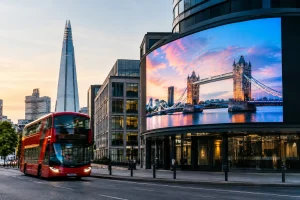
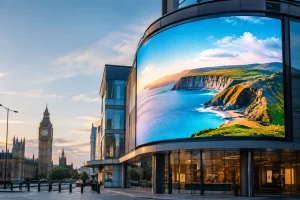
An LED billboard uses light-emitting diodes mounted directly on panels to create the image. These panels join together to form a large-format display, often for outdoor advertising, roadside messaging, public information or high-impact branding. Because the display itself generates strong brightness and is designed for scale, LED is typically the first choice where visibility at distance and in daylight matters.
An LCD video wall is made up of multiple LCD screens arranged together in a grid. Each panel has its own bezel, although modern systems can reduce the visual interruption between screens. LCD video walls are commonly used indoors where viewers are closer to the display, image detail is critical, and environmental conditions are more controlled.
At a glance, that may sound straightforward – LED for outdoors, LCD for indoors. In practice, there is more nuance than that. Some indoor environments benefit from LED, particularly where scale and visual impact are important. Equally, some sheltered spaces may still suit LCD very well. The right answer depends on brightness, viewing distance, content type, operating hours, maintenance access and commercial goals.
Brightness and visibility on site
Brightness is often where the gap between the two technologies becomes most obvious. LED billboards are designed to remain visible in direct sunlight and changing weather conditions. For external applications, that matters far more than showroom image quality. A display can look excellent in a brochure and still struggle on a south-facing elevation or roadside position.
LCD video walls perform well indoors, especially in receptions, shopping centres, control rooms and corporate settings where ambient light can be managed. They can produce sharp, vibrant images, but they are not generally the preferred option for exposed outdoor environments. Even in bright indoor spaces with large glazed frontages, LCD can begin to work harder against reflections and sunlight.
For venues that need content to be seen from passing traffic, across car parks or from a distance in public areas, LED usually offers the stronger solution. For viewers standing close to the screen and engaging with detailed creative, LCD often retains an advantage in fine image presentation.
Viewing distance and image quality
This is where many procurement decisions either succeed or go off course. LED screens are built around pixel pitch, which refers to the distance between pixels. A tighter pixel pitch delivers a finer image at closer viewing distances, but it also raises cost. A larger pitch is often perfectly suitable for roadside billboards, retail parks or transport locations where viewers are further away.
LCD video walls tend to offer high resolution and crisp detail at close range. That makes them well suited to internal environments where people are reading information, looking at product imagery, or engaging with content from only a few metres away. If your audience is in a boardroom, a showroom, a waiting area or an internal concourse, LCD can be a very effective choice.
If your audience is driving past, crossing a forecourt, entering a stadium or approaching a venue from distance, LED is generally the more practical fit. Paying for close-view LCD quality in a long-view environment is rarely money well spent.
Durability and environmental performance
For external use, durability is not a minor detail. It is central to the investment. Outdoor LED billboards are built to cope with rain, wind, temperature shifts and prolonged operating hours. Cabinet design, ingress protection, structural integration and thermal management all play a part in long-term reliability.
LCD video walls are more vulnerable by comparison. They are usually intended for controlled indoor settings and are not the natural choice where moisture, dust, temperature variation or public exposure create risk. Even when enclosed, the technology may still demand tighter environmental control than LED.
That does not mean LCD is fragile. It means the application needs to suit the product. In a reception area or internal retail setting, an LCD wall can perform very well. On an external elevation or transport-facing site, LED is usually the safer and more dependable route.
Screen size, flexibility and site integration
One of LED’s strongest advantages is flexibility. LED billboards can be manufactured in bespoke sizes and formats to suit the architecture, sightlines and commercial purpose of the site. That is particularly important for property owners and operators who want to maximise a façade, fit a non-standard structure or create a large digital advertising asset with strong revenue potential.
LCD video walls are constrained by the dimensions of the individual panels. You can build large arrays, but you are still working within a screen grid. For many interior applications that is perfectly acceptable. For seamless scale or unusual formats, it becomes more limiting.
This is often where a consultative approach makes the difference. A display should not be chosen in isolation from the building, audience flow and content strategy. It needs to fit the site properly, both physically and commercially.
Maintenance, lifespan and whole-life cost
Purchase price alone rarely tells the full story. LCD video walls can appear attractive at first, especially for indoor projects with modest scale. But the ongoing picture matters just as much. Panel failure, uniformity changes, replacement cycles and access requirements should all be considered before approval.
LED systems, particularly well-engineered commercial units, are designed for extended operation and serviceability. Front or rear access can be planned around the installation environment, and modules can often be maintained without replacing an entire screen section. Over time, that can support better operational continuity.
That said, LED is not automatically the cheaper option in every case. Fine pixel pitch indoor LED can represent a higher capital investment than LCD. If the environment is controlled, the audience is close and the size is moderate, LCD may still be the more cost-effective answer. The key is to compare total value over the life of the installation, not just the headline figure on the quotation.
Which technology suits which application?
For outdoor advertising, roadside digital billboards, business parks, stadium exteriors, forecourts and public-facing venue screens, LED is usually the correct choice. It delivers the brightness, resilience and scale these sites demand.
For indoor corporate spaces, retail interiors, receptions, meeting environments and locations where people view the content from close range, LCD video walls can be highly effective. They are often a good fit where detailed imagery matters more than extreme brightness or weather protection.
There are also grey areas. A shopping centre entrance, covered transport hub or large leisure venue may support either technology depending on viewing distance, lighting conditions and desired visual effect. That is where a proper survey and specification process matters. A standard product recommendation is not enough.
Making the right decision for your project
When comparing LED billboard vs LCD video wall, start with the site rather than the screen. Ask how far away the audience will be, what lighting conditions the display will face, how often the content will change, and whether the installation is expected to generate revenue, improve communication or strengthen brand presence.
Then look at practicalities. How will the screen be maintained? What are the operating hours? Is the structure suitable? Does the content need to be read in detail, or simply seen with impact? These are the questions that shape a dependable specification.
For many commercial buyers, the safest route is to work with a supplier that can assess the environment properly and build around the application rather than push a one-size-fits-all product. That is especially true for bespoke projects where screen performance, installation quality and aftercare all affect return on investment. With more than four decades in the sector, LEDsynergy Billboards understands that getting it right first time is what saves cost, delay and frustration later.
The best display is the one that keeps doing its job long after the installation team has left site – visible, reliable and properly suited to the space it serves.

I would recommend LED Synergy to anyone considering purchasing an LED sign. We have had so many compliments since it was installed and it has been a valuable asset.
Tom Hughes
OSI Food Solutions