
How to Specify Outdoor LED Screens Properly
A screen can look impressive on a quotation and still be the wrong choice for the site. That is usually where costly mistakes begin. If you are working out how to specify outdoor LED screens, the real job is not simply choosing a size or asking for a price. It is matching the screen to the location, viewing conditions, commercial purpose and long-term operating demands.
For buyers in retail, property, leisure and transport, that means asking better questions at the start. A well-specified outdoor LED screen should do more than switch on and look bright. It should perform consistently in British weather, suit the audience distance, integrate with your operations and remain commercially viable over time.
How to specify outdoor LED screens from the site backwards
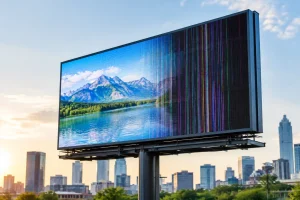
The most reliable way to specify an outdoor LED screen is to begin with the site rather than the product brochure. Every location places different demands on the display. A retail park roadside billboard has a different job from a transport hub information screen or a leisure venue promotion wall.
Start with viewing distance and viewing speed. If people will see the screen from passing vehicles, the content needs to read quickly and the display resolution must be appropriate for that distance. If the audience will stand close to the screen, such as in a shopping centre approach or entrance plaza, pixel pitch becomes more critical because viewers will notice image detail at shorter range.
You also need to think about line of sight, not just footfall. A screen placed too high, too low or at the wrong angle can underperform even if the specification looks strong on paper. Trees, street furniture, surrounding buildings and sunlight direction all affect visibility. This is why proper site survey work matters. It removes assumptions before they become installation problems.
Pixel pitch, screen size and resolution
Pixel pitch is one of the first things buyers are drawn to, and one of the easiest to overspend on. A tighter pixel pitch gives a sharper image at closer distances, but it also increases cost. For many roadside and large-format billboard applications, ultra-fine pitch is unnecessary because the audience is viewing from further away.
The right answer depends on the use case. If your screen is aimed at motorists or distant pedestrian traffic, a larger pitch may be entirely appropriate and more cost-effective. If the display is in a venue forecourt, mixed-use commercial setting or urban area where people gather close to the structure, a finer pitch may be worth the investment.
Screen size should be considered alongside pitch, not separately. A large screen with the wrong resolution balance can make creative look underwhelming. Equally, a very high-resolution screen that is too small for the location may fail to deliver the required impact. Good specification is about proportion – the physical dimensions, the expected reading distance and the type of content all need to work together.
Brightness is not just a headline figure
Outdoor screens need enough brightness to remain clear in daylight, but more is not always better. Excessive brightness can create planning concerns, increase power consumption and lead to poor viewing comfort at certain times of day.
What matters is controlled brightness with automatic adjustment. A screen should respond to changing ambient light conditions so it remains visible in full daylight without appearing harsh after dark. That protects image quality and supports responsible operation, particularly in built-up areas where nearby occupiers may be affected.
Weather protection, cabinet design and structural considerations
If you are specifying for the UK, weather resilience is not a nice extra. Outdoor LED screens are exposed to rain, wind, temperature changes and airborne debris throughout the year. The cabinet construction, sealing, drainage and overall engineering standard will all influence reliability.
This is where a bespoke approach often makes more sense than an off-the-shelf unit. The supporting steelwork, access arrangements and fixing methods should be designed for the site itself. Coastal locations, elevated structures and exposed business parks can all present different wind loading and corrosion considerations. A proper structural assessment is essential.
Maintenance access should also be addressed early. It is easy to focus on the front-of-house appearance and overlook how the system will be serviced. Front access or rear access may each be right depending on the installation position, but the decision needs to be made before design is finalised. If maintenance becomes awkward or expensive later, the whole-life cost rises quickly.
Power, data and control systems
A screen is only as dependable as the infrastructure behind it. One of the most common specification gaps is underestimating the importance of power supply, data connectivity and control platform requirements.
Outdoor LED screens need stable electrical provision, and in many cases site upgrades may be required. It is not enough to assume existing supplies are suitable. Load calculations, isolators, protection measures and cable routes should all be reviewed during the planning stage.
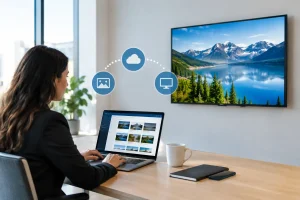
Data connectivity matters just as much. If you are managing a single screen, the setup may be straightforward. If you are overseeing multiple screens across sites, content management and remote monitoring become far more important. The software should support your team, not create extra work. That means considering who will upload content, how often campaigns will change, what approvals are needed and what happens if a communications issue occurs.
A practical specification looks at the screen as part of an operational system, not as a standalone object.
Content use should shape the hardware choice
One reason outdoor display projects disappoint is that the screen is specified before the content strategy is properly understood. Advertising loops, wayfinding messages, public information, promotions and branded motion graphics all place different demands on the display.
If the main purpose is commercial advertising, brightness consistency, image punch and scheduling flexibility will be priorities. If the display is used for information in transport or public environments, legibility, uptime and message clarity may matter more than cinematic visual performance. If 3D anamorphic content is being considered, screen geometry and installation design become much more specialised.
The key point is simple. Hardware should support the commercial objective. A well-built system that does not suit the actual content plan is still the wrong system.
Compliance, planning and responsible installation
When specifying an outdoor LED screen, compliance should be part of the conversation from day one. Planning permission, local authority requirements, structural standards, electrical compliance and environmental considerations all need to be addressed properly.
This is especially important for buyers managing public-facing assets where reputational risk matters. A supplier should be able to guide you through practical constraints, flag likely planning issues and provide realistic advice about what can be achieved on the site. That transparency saves time and avoids expensive redesigns.
It also helps to consider light spill, operating hours and nearby occupiers early. A screen that works brilliantly from a marketing point of view still needs to sit responsibly within its environment.
Choosing a supplier is part of how to specify outdoor LED screens
Specification is not just a technical exercise. It is also about choosing who will take responsibility for getting the job right. A low headline price can be tempting, but if it excludes survey work, structural input, installation planning, commissioning or aftercare, the real risk sits with the client.
A dependable supplier should be comfortable discussing trade-offs. They should explain where a premium specification is justified and where a more economical option will do the job perfectly well. That consultative approach is often what separates a long-lasting installation from one that becomes a recurring problem.
This is where experience counts. LEDsynergy Billboards has worked with a wide range of outdoor advertising and display applications, and that practical understanding matters because no two sites are identical. Good advice is rarely about selling the biggest screen. It is about delivering the right result first time.
Questions worth asking before approval
Before signing off a project, make sure the proposal answers a few basic but important points. What is the expected viewing distance and audience type? Is the pixel pitch suitable for that environment? How will brightness be managed throughout the day? What structural design has been allowed for? How will maintenance be carried out safely? What software and connectivity arrangements are included? And who supports the system after commissioning?
If any of those answers are vague, the specification is not finished.
Cost matters, but whole-life value matters more
Most commercial buyers are balancing budget against performance, and rightly so. The cheapest option may reduce capital spend, but it can increase service issues, shorten lifespan and create operational disruption. At the other end of the scale, over-specifying can tie up budget in features the site does not need.
The best value usually sits in the middle – a screen designed around the application, built for the environment and supported properly after installation. That approach gives you a stronger return over the life of the asset, whether the goal is advertising revenue, tenant communication, public information or brand presence.
If you are deciding how to specify outdoor LED screens, think less about buying a product and more about investing in a working system that has to perform every day, in all conditions, for years to come. Get the early decisions right, and the rest of the project becomes far easier.

I would recommend LED Synergy to anyone considering purchasing an LED sign. We have had so many compliments since it was installed and it has been a valuable asset.
Tom Hughes
OSI Food Solutions