
Choosing a Large Format Advertising Screen
A large format advertising screen has one job at first glance – get noticed. In practice, it has several more. It needs to work reliably in a live commercial setting, suit the site, support your content plan, and justify the investment over years rather than months. For property owners, venue operators and commercial teams, that means the right screen is rarely the cheapest one on paper. It is the one specified properly from the start.
That point matters because digital display projects are often judged on the visible result while the real success is decided much earlier. Screen size, pixel pitch and brightness are only part of the picture. The environment, structural requirements, viewing distance, operating hours, content workflow and maintenance access all have a direct effect on performance and total cost.
What a large format advertising screen needs to do
In a retail park, transport hub or leisure venue, a screen is not there simply to fill space. It should either drive advertising revenue, improve brand presence, help tenants promote offers, or make on-site messaging more responsive. In many cases, it does all four.
That is why specification should begin with commercial purpose rather than product type. A roadside digital billboard has different demands from an internal atrium display. A shopping centre screen may need to balance premium image quality with long operating hours and close viewing distances. A business park installation may prioritise durability, remote content updates and legibility in mixed weather conditions. The screen has to fit the task, not the other way round.
When buyers skip this stage, they often end up with avoidable compromises. That might be a display that is excessively bright for its setting, underpowered for daylight viewing, difficult to maintain, or tied to a content system that does not suit day-to-day operations. None of those issues are dramatic at handover, but all of them become expensive once the screen is in use.
Large format advertising screen specification starts with the site
The site survey is where good projects become dependable ones. Before selecting cabinet size or discussing media sales, it is worth looking closely at how the screen will actually live on site.
Outdoor installations need careful consideration of exposure, wind loading, structural support, drainage, access and ambient light. Indoor screens bring their own requirements, particularly around mounting methods, viewing angles, ceiling heights, reflections and integration with the surrounding architecture. In both cases, power supply, data connectivity and service access need to be resolved early, not after manufacture has started.
This is also where bespoke manufacture can make a real difference. Standard formats suit many applications, but not every location is standard. A screen may need to fit a restricted footprint, align with an existing façade, meet planning constraints or work within a specific audience sightline. In those situations, a custom-built solution can be the more cost-effective option over the life of the system because it avoids forcing the site to accommodate the wrong product.
Brightness, pixel pitch and viewing distance
These are often the first points buyers ask about, and rightly so, but they need context.
Brightness is not just a bigger-is-better figure. An external screen facing direct sunlight will need a different brightness level from one positioned under a canopy or used indoors. Too little brightness and content washes out. Too much, and the display becomes uncomfortable, wasteful and potentially problematic for its surroundings. Automatic brightness adjustment is often sensible because it helps keep the image consistent while reducing unnecessary power use.
Pixel pitch affects image sharpness and the ideal viewing distance. A tighter pitch generally suits closer viewing, while a larger pitch can be entirely appropriate for roadside or long-distance applications. The key is to match pitch to how the audience actually sees the screen. Paying for ultra-fine resolution where it is not needed can inflate budget without improving results. On the other hand, using a coarse pitch in a close-view retail environment can undermine the quality of the whole installation.
Screen size should be considered alongside both. A larger display may deliver more impact, but only if the content remains clear and the structure can support it properly. Bigger is not automatically better if the location, budget or viewing conditions point to a different balance.
Reliability matters more than brochure claims
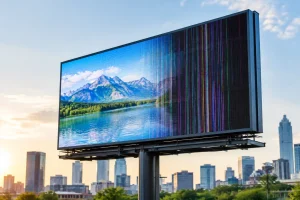
For a commercial buyer, reliability is where value is really measured. A screen that looks impressive on day one but suffers recurring faults, poor weather resistance or patchy support quickly stops being an asset.
This is why build quality, component choice and aftercare deserve as much attention as front-end visuals. Outdoor large format screens in particular need to cope with British conditions year-round. That includes rain, temperature changes, wind, dirt and sustained operating hours. Cabinet design, heat management and ingress protection all matter because they affect lifespan and consistency.
Support matters just as much. If a fault occurs, who responds, how quickly, and with what level of technical knowledge? Buyers managing public-facing sites do not want a supplier who disappears once the install is complete. They want accountability, practical advice and a team that understands the system because they were involved in delivering it properly.
That is one reason many organisations prefer an end-to-end partner rather than splitting manufacture, installation and software between multiple parties. There can be cost advantages in procurement on paper when roles are fragmented, but it often creates uncertainty when anything needs attention later.
Content control can make or break the investment
Even an excellent screen will underperform if content management is awkward. This tends to be overlooked during procurement because hardware is easier to compare than day-to-day usability.
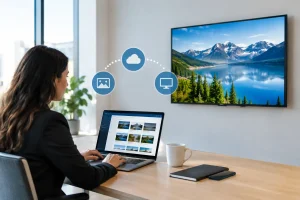
Think about who will update the screen and how often. A single-site operator may need straightforward scheduling for promotions, brand campaigns and event messaging. A multi-site estate may need centralised control, remote monitoring and user permissions across several locations. Advertising-led environments may also require the ability to manage multiple advertisers, proof-of-play reporting and scheduling around fixed campaign slots.
The right setup depends on internal resource as much as technical preference. Some teams want direct control. Others want support with commissioning, configuration and training so they can manage confidently after handover. What matters is choosing a system that fits your operation rather than adding complexity for its own sake.
Planning, installation and long-term cost
A large digital display is not an off-the-shelf purchase in the same way as many smaller signage products. Planning considerations, structural checks, traffic visibility, local authority requirements and electrical works may all influence timescales and design choices.
This is where experience saves time and avoids rework. Installations need to be planned around site access, lifting requirements, public safety and minimal disruption to normal operations. In some environments, out-of-hours work is the right solution. In others, phased installation is more practical. The right approach depends on the site and the stakeholders involved.
Long-term cost should also be viewed sensibly. Initial price matters, of course, but so do energy use, maintenance access, replacement parts, downtime risk and expected service life. A lower upfront quote can become a poor investment if the screen is harder to maintain or less dependable in service. Buyers who focus on total ownership cost usually make stronger decisions than those comparing headline figures alone.
Where the best results usually come from
The strongest projects are rarely the ones built around the most ambitious specification. They are the ones where the screen, the site and the commercial objective line up cleanly.
For some organisations, that means a prominent roadside billboard designed to maximise advertising value from passing traffic. For others, it means an internal feature screen that modernises the customer experience and gives marketing teams more control over promotions. There are also cases where a 3D installation or an unusual format is worth considering, but only when it serves a clear business purpose rather than novelty alone.
At LEDsynergy Billboards, we have seen time and again that buyers get the best outcome when they treat digital display as an operational asset, not just a marketing purchase. That usually leads to better specification, smoother delivery and fewer surprises after launch.
A well-chosen large format advertising screen should do more than look impressive on installation day. It should keep working hard for your site, your tenants, your advertisers and your team – and if the solution is right first time, that is where the real return begins.

I would recommend LED Synergy to anyone considering purchasing an LED sign. We have had so many compliments since it was installed and it has been a valuable asset.
Tom Hughes
OSI Food Solutions