
Outdoor Billboard Durability Guide for UK Sites
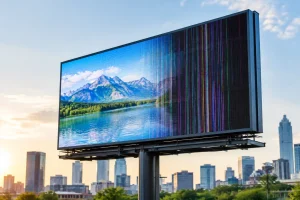
A digital billboard beside a busy road, retail park or station has no option to pause when the weather turns. It must remain clear in driving rain, cope with summer heat, resist corrosion and continue delivering campaigns long after installation day. This outdoor billboard durability guide sets out what UK buyers should assess before investing in an outdoor LED screen – and why the quality of the complete system matters more than a headline specification.
Durability begins before the screen is built
Outdoor LED billboards are exposed assets. Rain, wind, airborne salt, pollution, vibration, temperature changes and direct sunlight all place demands on the display and its supporting structure. A durable result is therefore not achieved by choosing an outdoor-rated cabinet alone. It relies on sound engineering across the screen, steelwork, electrics, foundations, controls and installation.
The first question should be what the site will ask of the billboard. A roadside location may require greater resistance to vibration and vehicle emissions. A coastal site needs particular attention to corrosion protection. A shopping centre car park may introduce risks from vehicle strikes, restricted access and variable lighting. Each setting changes the right specification.
This is why a proper site survey is not a formality. It identifies wind exposure, viewing distances, access routes, available power, drainage, ground conditions and practical maintenance requirements before the system is designed. Finding these issues after fabrication can add cost, compromise the installation or leave an otherwise capable display difficult to service.
Weather protection is more than an IP rating
Ingress Protection, commonly shortened to IP, is a useful starting point. It indicates the enclosure’s protection against solids and water. However, it is not a lifetime guarantee of outdoor performance. The rating must be supported by cabinet construction, gasket quality, cable entry points, drainage, ventilation and careful assembly.
Water is rarely a problem because it falls vertically. It finds weaknesses through wind-driven rain, damaged seals, poorly fitted access doors and cable penetrations. A well-designed outdoor display directs water away from vulnerable areas and allows moisture to escape rather than remain trapped within the structure.
Heat management deserves equal attention. LED modules, power supplies and control equipment generate heat, while direct sun can raise cabinet temperatures considerably. Inadequate thermal design can shorten component life, affect brightness and increase the chance of unplanned downtime. Passive cooling is often preferable where it can be engineered effectively, as it avoids extra moving parts. In higher-load or more enclosed applications, managed ventilation may be necessary. The correct approach depends on the screen size, pixel pitch, orientation and local conditions.
Coastal and polluted locations need extra protection
Salt-laden air accelerates corrosion, even when a billboard is not directly on the seafront. Industrial pollution, grit and regular road-salt spray can create similar concerns. In these environments, the finish of the cabinet, fasteners, rear structure and fixings should be assessed as seriously as the LEDs themselves.
Powder-coated steel, aluminium elements and suitable stainless-steel fixings can all play a part, but material selection must work as a system. Dissimilar metals in contact can create corrosion issues if they are not isolated correctly. A supplier should be able to explain how the proposed screen and structure are suited to the actual location, rather than relying on generic assurances.
The structure must be engineered for the location
The display face receives the attention, but the supporting structure carries the safety and longevity of the investment. A free-standing billboard, wall-mounted screen or display fixed to an existing building all require an appropriate structural solution.
Wind loading is a major factor in the UK. The forces on a large, flat display can be substantial, particularly on exposed sites and at height. Screen dimensions, mounting method, elevation, surrounding buildings and local wind conditions affect the design. Foundations for a totem or roadside billboard must be sized for the structure and ground conditions, not simply based on a standard drawing used elsewhere.
Wall-mounted screens require a clear understanding of the host building. The wall condition, load-bearing capacity, fixings and access for installation all need checking. Where the display will be visible to the public, neat cable routes, secure access panels and professionally finished steelwork are part of the job. They protect the system and protect the appearance of the site.
Brightness and energy settings affect service life
An outdoor billboard needs sufficient brightness to remain legible in daylight, but maximum output around the clock is neither necessary nor desirable. Excessive brightness wastes energy, can create glare and places avoidable stress on components.
Automatic brightness control should adjust output in response to ambient light. It helps the display remain comfortable to view after dark while preserving daytime impact. Good commissioning also includes setting sensible operating parameters for the location, content and viewing angle.
Content has a bearing too. Very bright, static white areas and poorly prepared artwork can increase perceived glare and heat load. Marketing teams do not need to compromise creative ambition, but they should work within practical brightness and scheduling rules. A supplier that understands both the display hardware and the operating environment can provide guidance that keeps campaigns effective without treating the screen as disposable.
Maintenance access is a durability decision
Every electronic display will require inspection and occasional component replacement over its working life. The difference between a well-supported asset and a frustrating one is often access.
Before purchase, establish how modules, power supplies and receiving equipment can be reached. Is front service access needed because the rear is against a wall? Can engineers safely reach the display without disrupting a tenant, road or venue operation? Is there room to open service doors and carry out diagnostics? These are practical questions, but they have a direct effect on maintenance time and cost.
Remote monitoring can identify faults early and reduce unnecessary visits. It does not replace physical inspections. Fixings, seals, filters where fitted, electrical connections and the general condition of the structure should be checked on a planned basis. The right frequency depends on exposure and usage, with coastal, roadside and high-footfall sites generally benefiting from closer attention.
A sensible maintenance arrangement should cover fault response, replacement parts, remote support and a clear route for escalating issues. Ask who will support the system after commissioning, where key parts are held and whether the installer has the technical knowledge to diagnose both display and control issues. Accountability matters when advertising revenue or public information is on the screen.
What to ask before specifying an outdoor billboard
Procurement should look beyond the initial purchase figure. A lower-cost display can prove expensive if its structure, weather protection, brightness control or support model is not suitable for the site. Equally, the highest specification is not automatically the best value if the location does not require it.
Ask suppliers to explain the proposed cabinet construction, ingress protection, thermal management, corrosion measures, structural design and service access in plain terms. Request detail on warranty scope, expected maintenance, spare-module availability and the process for handling faults. You should also confirm responsibilities for civils, electrical works, planning considerations, installation and commissioning.
A bespoke solution is particularly valuable where access is restricted, the screen must fit an existing feature, or the site has demanding operational requirements. Standard products have their place, but forcing one onto an unsuitable site can leave the buyer carrying the risk.
Long-term value comes from getting the details right
Outdoor digital billboards are visible investments, often operating for long hours in places where reliability reflects directly on the property owner, venue or advertiser. Durability is not one feature on a data sheet. It is the result of a considered design, correctly specified materials, professional installation and responsive support throughout the screen’s life.
For organisations planning a high-value display project, LEDsynergy brings British manufacturing, site-led design and more than 45 years of practical experience to the process. The most dependable billboard is the one designed around its environment from the outset, then maintained by people who understand exactly how it was built.

I would recommend LED Synergy to anyone considering purchasing an LED sign. We have had so many compliments since it was installed and it has been a valuable asset.
Tom Hughes
OSI Food Solutions