
How to Upgrade Static Signage Properly
A faded poster board in a busy retail park does more than look tired. It wastes attention, limits what you can say, and often costs more over time than buyers expect. If you are looking at how to upgrade static signage, the real question is not simply which screen to buy. It is how to move from a fixed asset to a display system that earns its place operationally and commercially.
For most organisations, that shift is driven by one of three pressures. You may need stronger visibility, more control over messaging, or a better return from a high-footfall location. Digital signage can deliver all three, but only when the specification matches the site, the audience and the day-to-day realities of running it.
How to upgrade static signage without creating new problems
The biggest mistake we see is treating a digital upgrade as a straight swap. Replace a printed sign with a screen, load some content, and expect the result to take care of itself. In practice, static and digital signage behave very differently.
A printed panel is passive. A digital display needs the right pixel pitch, brightness, structural design, power supply, connectivity and content workflow. It also needs to suit the environment. An outdoor roadside billboard has very different demands from a shopping centre feature screen or a transport information display.
That is why the first stage should be diagnosis, not product selection. Before discussing screen type, it is worth asking what the existing signage is failing to do. Is it too slow to update? Is it being ignored? Is the location valuable but underused? Is maintenance becoming a recurring cost? Clear answers at this stage help avoid overspecifying in some areas and cutting corners in others.
Start with the site, not the screen
A proper site review usually tells you more than a product brochure ever will. Viewing distance, ambient light, traffic speed, dwell time and mounting conditions all affect what the finished display needs to achieve.
For example, a screen positioned beside a fast-moving road needs clarity at distance and content designed for brief viewing windows. A display in a leisure venue may need stronger colour performance, closer pixel pitch and a housing design that works with the interior environment. In transport settings, reliability and legibility often matter more than visual flourish.
There is also the practical side. Can the structure support the chosen display? Is there safe access for installation and future maintenance? What are the local planning considerations? Where will power and data come from? These are not minor details to sort out later. They shape the viable options from the start.
For UK buyers, this is where experience matters. A bespoke approach is often the difference between a screen that looks good on paper and one that performs properly for years.
Choose the right upgrade path for the job
Not every business needs the same type of digital replacement. The right answer depends on whether the sign is meant to advertise, inform, direct, or do a mixture of all three.
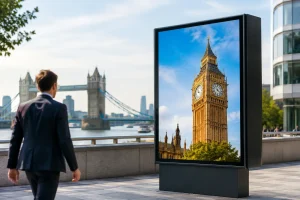
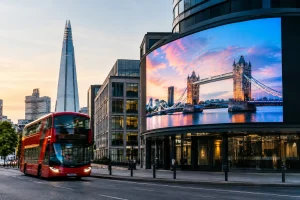
If the goal is advertising revenue or stronger promotional impact, a full-colour LED billboard is often the most effective route. It gives you flexibility to rotate campaigns, sell slots to partners or tenants, and react quickly to seasonal opportunities. In high-traffic commercial sites, that flexibility can turn a static cost into an active asset.
If the goal is customer communication, the priority may be different. Shopping centres, business parks and public venues often need displays that handle wayfinding, notices, offers and brand messaging in one place. Here, content control and scheduling may matter more than headline screen size.
Some buyers are drawn to the visual appeal of large-format or 3D digital displays. They can be highly effective, but only where the audience and environment justify the investment. A striking format in the wrong setting can become an expensive novelty. In the right location, however, it can transform visibility and brand perception.
Budgeting properly means looking past the purchase price
When people compare static signage with digital, they often focus on upfront cost. That is understandable, but incomplete. Printed signage may seem cheaper initially, yet repeated design, production and replacement costs build up. It also lacks flexibility. If prices change, campaigns shift or messages need correcting, static signage becomes slow and wasteful.
A digital system has a higher initial outlay, but it changes the economics. Messaging can be updated instantly. Campaigns can be scheduled in advance. Multiple advertisers or departments can share the same asset. For some sites, that creates a clear commercial return. For others, the value comes through improved communication, stronger brand presentation and less operational friction.
That said, not every site justifies the same spend. A good supplier should be open about trade-offs. You may not need the highest brightness if the display is indoors. You may not need ultra-fine pixel pitch if the audience views the screen from further away. Equally, trying to save money by under-specifying an outdoor installation often proves costly later.
Content strategy is part of the upgrade
A digital display is only as effective as the content it runs. This is where many static-to-digital projects lose momentum. The hardware is installed correctly, but the organisation has not planned how content will be created, approved and updated.
If your current signage has been static for years, the move to digital will change internal responsibilities. Marketing may need control over promotional campaigns. Facilities may manage operational messages. Property teams may want tenant advertising or public information added into the mix. Without clear ownership, the screen can quickly become underused.
The most successful upgrades start with a realistic content plan. How often will messages change? Who signs them off? Do you need daypart scheduling, emergency messaging, or integration with existing systems? Content should also suit the context. A roadside billboard needs bold, simple creative. A screen in a shopping centre can support more layered messaging because dwell time is longer.
Installation, commissioning and support matter more than buyers think
A digital signage project does not end when the screen arrives on site. Installation quality affects appearance, safety, reliability and future maintenance. Commissioning is equally important because it confirms the system is configured properly, brightness levels are set correctly, and connectivity works as intended.
This is why end-to-end delivery is valuable, especially for organisations that do not want to coordinate separate designers, manufacturers, installers and software providers. A joined-up process reduces risk and gives buyers a single point of accountability.
Ongoing support should also be part of the conversation before any order is placed. Ask what happens if a fault occurs, how service access is handled, what warranty cover is included, and whether spare parts and technical help are readily available. Long-term reliability is not just about component quality. It is also about whether the supplier stands behind the system once it is live.
For many clients, that reassurance is a deciding factor. A cheaper screen can become very expensive if support is slow, unclear or outsourced without ownership.
How to upgrade static signage in multi-site estates
If you manage more than one location, consistency becomes a major consideration. Rolling out digital signage across a retail estate, transport network or property portfolio is not simply a larger version of a single-site project. Standardisation, remote management and service response all become more important.
In these cases, it often makes sense to create a specification framework rather than treat every site in isolation. You may still need bespoke adjustments for different environments, but a common approach to content management, hardware standards and maintenance can simplify procurement and reduce long-term costs.
This is also where British manufacturing and project support can make a practical difference. Shorter supply chains, direct technical communication and a team that understands local site conditions tend to make delivery more predictable. For many procurement leads and facilities teams, that matters just as much as the screen specification itself.
LEDsynergy Billboards works with this kind of brief regularly, where the requirement is not just a display, but a dependable system backed by proper consultation, installation and support.
The best upgrade is the one that fits your operation
There is no single answer to how to upgrade static signage because the right solution depends on what the sign needs to achieve once it becomes digital. Some organisations need maximum advertising impact. Others need better control, clearer communication or a smarter way to use valuable space.
The safest route is to start with the environment, the business case and the operational plan, then build the display around those realities. That approach usually leads to better performance, fewer surprises and a system that continues to justify the investment long after installation day.
If your current signage feels dated, limited or increasingly inefficient, that is usually a sign to ask harder questions about what the location could be doing for you. The best digital upgrades do not just replace static signage. They make the site work harder, communicate better and stay useful as your needs change.

I would recommend LED Synergy to anyone considering purchasing an LED sign. We have had so many compliments since it was installed and it has been a valuable asset.
Tom Hughes
OSI Food Solutions