
Top Benefits of Bespoke Displays for UK Sites
A screen that is too small for its viewing distance, too bright for its neighbours or poorly positioned for passing traffic soon becomes an expensive compromise. The top benefits of bespoke displays come from avoiding those compromises at the design stage, creating a digital screen that suits the site, the audience and the commercial objective from day one.
For property operators, facilities teams and marketing decision-makers, this matters because a digital display is not simply a piece of hardware. It is a long-term public-facing asset. It must attract attention, communicate clearly, withstand its environment and remain practical to manage long after installation day.
Bespoke displays are designed around the real site
Every location places different demands on a display. A roadside advertising screen may need to be legible to motorists at speed and cope with direct sunlight. A shopping centre display may need a refined finish, carefully controlled brightness and integration with the surrounding interior. A transport environment may prioritise dependable operation, remote content updates and clear information at a glance.
An off-the-shelf screen is built to satisfy a broad set of applications. A bespoke display starts with the questions that actually determine performance: where will viewers stand or travel, how far away will they be, what content will be shown, what power and data connections are available, and what restrictions apply to the structure or planning environment?
This process informs screen size, pixel pitch, brightness, cabinet configuration, mounting method and protective features. It also prevents a common mistake: selecting a screen by physical dimensions or headline price alone, then discovering that its image quality or visibility does not suit the location.
Better viewing distances and clearer messaging
Pixel pitch is one of the most important decisions in any LED display project. It describes the distance between pixels and has a direct effect on image detail and appropriate viewing distance. A finer pitch can deliver sharper close-up viewing, while a larger pitch may be more suitable and cost-effective for a large outdoor screen viewed from further away.
The right answer depends on the application. There is little value in paying for very fine pixel spacing where the audience is 30 metres away. Equally, a screen intended for close pedestrian viewing cannot rely on a specification designed for a distant roadside audience. Bespoke planning ensures the display earns its place visually without paying for capability the site does not need.
Stronger commercial value from a display built to perform
Digital screens are often purchased to increase awareness, promote offers, support wayfinding or generate advertising income. In each case, the display needs to be seen clearly and used confidently if it is to provide a worthwhile return.
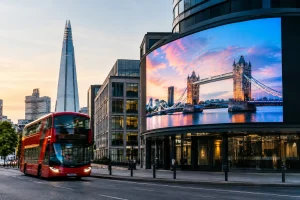
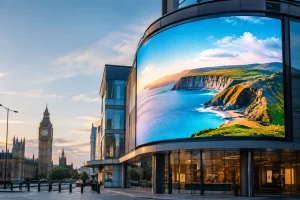
A bespoke system allows the screen format to match the commercial opportunity. This may mean a landscape billboard for traditional advertising creative, a portrait display at a pedestrian entrance, a curved installation that follows an architectural feature, or a 3D billboard designed to make a memorable impact in a high-footfall setting.
For landlords and venue operators, the ability to create clearly defined advertising inventory can be particularly valuable. Content can be scheduled by time, day, campaign or advertiser, allowing the same screen to support tenant communication, venue information and paid advertising. The value is not simply in having a digital screen, but in having one with the scale, quality and placement to command attention.
Content flexibility without replacing the hardware
Printed signage has a fixed production cycle. Once installed, changing a campaign involves new artwork, printing, access equipment and labour. A digital display can be updated remotely, allowing teams to respond quickly to promotions, events, safety messages or available advertising slots.
That flexibility becomes more useful when the display has been designed for the content it will carry. A wide-format screen, for example, can accommodate advertising layouts and dynamic motion graphics differently from a tall portrait screen. Content management requirements should therefore be considered early, including who will upload material, how approvals will work and whether the screen needs to connect with other systems.
A good bespoke project considers these operational details before commissioning. This helps prevent the display becoming difficult to manage once it has been handed over.
Reliability is specified, not assumed
Public-facing digital displays are expected to work for long hours in demanding conditions. Outdoor systems must manage changing weather, temperature variation, moisture, dust and sunlight. Indoor screens may face long operating hours, busy public areas and the need for an unobtrusive, professional finish.
Bespoke manufacture makes it possible to specify the right enclosure, ventilation approach, environmental protection and component access for the installation. This is particularly important where a screen is mounted high, built into a façade or positioned in an area where maintenance access needs careful planning.
Reliability is also about the supporting infrastructure. Power provision, data connectivity, structural calculations, foundations, cable routes and access for future servicing all affect the long-term outcome. Treating these as part of the display solution, rather than separate afterthoughts, reduces avoidable disruption and risk.
There is a trade-off to recognise. A purpose-built system can require more consultation and a longer lead time than buying a standard screen from stock. However, for a significant commercial installation, that upfront work is usually what protects the investment. It gives the supplier, installer and client a shared understanding of what the system must achieve and how it will be supported.
The top benefits of bespoke displays include a better fit for your brand
A display should look as though it belongs at the site. For premium retail, hospitality and commercial property environments, the cabinet finish, screen proportions and integration details can affect how the whole space is perceived. A poorly fitted display can distract from an otherwise well-maintained venue. A carefully designed installation can become a visible part of the environment and strengthen its sense of quality.
Bespoke screens can be configured to work with existing architecture rather than against it. That may include custom cladding, integrated framing, specialist mounts, freestanding structures or dimensions made to fit a defined aperture. The result is a more considered installation, without forcing the site to adapt around a standard product.
Brand impact also depends on colour reproduction and image consistency. Full-colour LED displays need to present creative work accurately enough for logos, photography, video and campaign messages to retain their intended effect. Screen quality, calibration and appropriate brightness all play a part. The brightest screen is not automatically the best screen if it causes glare, discomfort or local concerns after dark.
A single accountable delivery partner reduces project risk
Complex display projects involve several disciplines: site assessment, screen design, civil or structural work, electrical provision, installation, commissioning, software setup and ongoing support. When responsibility is fragmented, problems can be harder to diagnose and resolve.
Working with a specialist that can advise from survey through to installation and aftercare gives buyers a clearer route to accountability. It also makes procurement more straightforward. Instead of coordinating multiple parties with competing assumptions, the client has a team focused on delivering a system that works as intended.
This is where experience makes a practical difference. LEDsynergy Billboards approaches projects as complete display installations, not simply screen supply. Careful consultation can identify issues around viewing angles, access, planning considerations and connectivity before they affect programme, cost or operational performance.
For facilities managers, ongoing support is equally important. Ask how faults will be handled, what warranty cover includes, whether replacement parts are available, and how content or control-system issues will be diagnosed. The most attractive purchase price can lose its appeal quickly if support is unclear when the screen is live.
Choosing when bespoke is the right investment
Not every project needs a fully customised display. A standard-sized indoor screen can be entirely appropriate where the location is straightforward, the audience is predictable and the required format matches an established product. Bespoke becomes particularly valuable when the site has physical constraints, demanding environmental conditions, unusual dimensions, revenue targets or a high-profile public role.
The right starting point is not a product brochure. It is a clear brief covering the audience, location, operating hours, content plan, commercial aims and long-term maintenance expectations. From there, screen specification becomes a reasoned decision rather than a guess.
A well-designed bespoke display does more than fill a space with moving images. It gives your organisation a dependable communications asset that is visible when it needs to be, practical to operate and built for the conditions it will face.

I would recommend LED Synergy to anyone considering purchasing an LED sign. We have had so many compliments since it was installed and it has been a valuable asset.
Tom Hughes
OSI Food Solutions