
Emerging LED Display Technology That Delivers
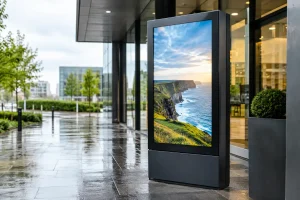
A roadside screen that remains clear in low winter sun, a retail display that can sit closer to customers, and a billboard that reports a developing fault before it becomes a lost trading day all point to the same shift. Emerging LED display technology is not simply about making screens brighter or thinner. For property owners, venue operators and advertisers, it is about making a significant capital investment work harder for longer.
The newest developments can improve image quality, energy use, maintenance access and creative flexibility. However, the right specification still depends on the site, viewing distance, operating hours, commercial model and the people who will support the screen after commissioning. A feature that looks impressive on a product sheet is not automatically the best choice for a public-facing installation.
Where emerging LED display technology is making a difference
The most useful advances are solving familiar operational problems. LED displays have long offered high brightness, long service life and flexible formats, but screen technology is becoming more refined in the areas that matter to commercial buyers: consistent performance, closer viewing, controlled power consumption and better visibility of system health.
Finer pixel pitches for closer audiences
Pixel pitch remains one of the most important decisions in any LED project. It is the distance between the centres of adjacent pixels, usually measured in millimetres. A smaller pitch creates a higher-resolution image at a closer viewing distance, which is particularly valuable for indoor retail, reception areas, transport concourses and leisure settings.
Fine-pitch LED is allowing larger displays to move into spaces once dominated by LCD video walls. Unlike a video wall, an LED screen can avoid visible bezel lines and can be manufactured to suit an unusual wall, column or architectural feature. That said, fine pitch is not a universal upgrade. It carries a higher initial cost, requires careful handling during installation and may provide little commercial benefit if viewers are routinely 20 metres away.
A practical specification starts with where people will stand, walk, drive or queue. It should also consider the type of content being shown. Detailed product imagery, small text and live information feeds need more resolution than broad-format advertising viewed from a distance.
COB and improved protection at fine pitch
Chip-on-board, often known as COB, is gaining attention for indoor and close-viewing LED applications. Rather than mounting individual LED packages in the conventional way, COB technology encapsulates the LEDs on the module surface. This can produce a smoother-looking image, reduce surface reflections and offer greater protection against knocks, dust and moisture.
For busy public spaces, that additional protection can be attractive. Screens in shopping centres, visitor attractions and corporate environments are often close enough for accidental contact, especially at lower levels. COB can help reduce the vulnerability associated with very fine-pitch displays.
There are trade-offs. Conventional surface-mounted device, or SMD, LED remains a proven and highly capable option across many applications. Module replacement methods, image characteristics, available pixel pitches and budget all need to be assessed. The question is not whether COB is newer, but whether it improves the outcome at that particular site.
Better energy performance without compromising visibility
Outdoor LED must compete with direct daylight, yet operators are rightly focused on electricity use. Developments in common-cathode design, efficient driver electronics and intelligent brightness control are helping screens use power more proportionately to their environment and content.
Automatic brightness adjustment is especially valuable in the UK, where conditions can change quickly from overcast daylight to strong sun and then darkness. A correctly configured screen should remain legible when needed without operating at maximum brightness unnecessarily. It can also support a more considerate relationship with neighbouring properties and road users.
Energy figures should always be discussed in realistic terms. Maximum power consumption is useful for electrical design, but average consumption gives a clearer picture of likely running costs. It will vary according to screen brightness, white content, scheduling, ambient conditions and operating hours. A supplier should be able to explain those assumptions rather than offering a single figure without context.
Image quality is now about more than resolution
A screen can have an impressive pixel pitch and still perform poorly if its processing, calibration or content preparation is overlooked. Emerging LED display technology is putting more emphasis on the full image chain, from the source file to the viewer’s eye.
Higher refresh rates and improved grey-scale performance can make motion look cleaner, reduce flicker on camera and maintain detail in darker areas of an image. This matters for premium advertising, live sport, event spaces and displays that may appear in social content or broadcast footage. It also matters for everyday viewing. Poor colour balance and crushed blacks can make even a high-resolution screen feel flat.
Calibration is equally important. Panels should work together as one display, with consistent colour and brightness across the full face. Over time, quality components and appropriate calibration help maintain that consistency. For a large digital billboard, uneven modules are not a minor aesthetic issue. They affect advertiser confidence and the perceived quality of the venue or site.
Content remains part of the engineering conversation. The most technically advanced display cannot rescue artwork with unsuitable fonts, weak contrast or incorrect dimensions. Early advice on content resolution, safe areas, playback formats and scheduling helps avoid expensive amendments after installation.
Smarter monitoring changes the support model
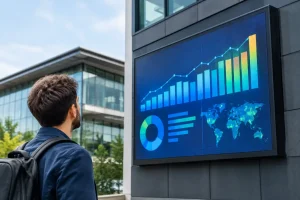
Remote monitoring is one of the quieter but most useful developments in commercial LED. Modern control systems can provide visibility of temperature, receiving cards, power supplies, communications status and other key conditions. Instead of waiting for a visible failure or a call from a site team, a support provider may be able to identify an issue early.
That does not eliminate the need for planned maintenance or responsive engineers. It does, however, make support more informed. A screen installed at height, beside a carriageway or within a busy venue should be designed with access and serviceability in mind from the outset. The cost of reaching a component can be as important as the component itself.
For multi-site operators, central monitoring and content control can also simplify daily management. Campaigns, opening messages, travel updates or event promotions can be scheduled across different locations while local teams retain suitable control. The right arrangement depends on who owns the content, who approves it and how quickly information needs to change.
3D LED needs the right site, not just the right screen
Anamorphic 3D billboards have become a visible example of what modern LED can do. By using carefully produced perspective content, a flat corner screen can create the impression of depth and movement. Done well, the effect can create a strong reason for people to stop, film and share.
The technology alone does not create that result. The viewing angle is central. The screen shape, location, pedestrian flow and likely camera position need to be assessed before the structure is designed. A 3D creative concept seen from the wrong side of a site may simply look distorted.
These installations also need a realistic plan for content. Bespoke 3D animation requires greater creative investment than standard display artwork. For landmark locations, that may be justified by attention and commercial value. For a business park, retail entrance or transport facility, a conventional high-quality LED display may deliver a stronger return because it suits a broader range of everyday messaging.
What buyers should ask before specifying new LED technology
The most dependable projects begin with the operating requirement, not a preferred product name. Before choosing between fine pitch, COB, high brightness or a specialist 3D format, establish what the display must achieve commercially and operationally.
A worthwhile conversation should cover viewing distances, daylight levels, structural conditions, electrical capacity, network provision, access equipment, planning considerations, content responsibilities and expected operating hours. It should also cover what happens when a module, power supply or control component needs attention. Warranty terms are valuable, but clear accountability and accessible ongoing support are what protect the investment over its working life.
British manufacturing and bespoke engineering can be particularly helpful where a site has awkward dimensions, demanding environmental conditions or a fixed installation programme. Rather than adapting the site around a standard cabinet, the display system can be designed around the site and its commercial purpose. This is the approach LEDsynergy Billboards applies to projects where reliability, appearance and maintainability must work together.
Choosing progress that pays back
The best emerging technology is rarely the feature with the most headlines. It is the development that helps a screen earn attention, reduce avoidable operating costs, remain serviceable and keep performing when the weather, footfall and campaign demands are at their toughest.
Ask prospective suppliers to show how their recommended solution fits your actual environment, not an idealised demonstration setting. When the technical choice is tied to viewing conditions, content plans and long-term support, a digital display becomes far easier to manage – and far more likely to keep delivering value long after the launch day.
I would recommend LED Synergy to anyone considering purchasing an LED sign. We have had so many compliments since it was installed and it has been a valuable asset.
Tom Hughes
OSI Food Solutions