
Best LED Signage for Leisure Attractions in the UK
A family arriving at a busy attraction decides where to look in seconds. They may be searching for parking information, the next show time, food offers or the entrance to a booked activity. The best LED signage for leisure attractions earns attention at that precise moment, then turns it into a clearer journey, a better visitor experience or additional spend on site.
For operators, this is not simply a question of buying the biggest screen available. A display that looks impressive in a showroom can be difficult to read in bright sunlight, poorly positioned for the queue line, or costly to maintain once it is installed. The right project starts with how people use the venue and builds the screen specification around that reality.
What makes LED signage right for a leisure venue?
Leisure attractions have a particular set of demands. Footfall often rises and falls sharply across the day, visitors include children, families and groups, and communications can change at short notice due to weather, capacity, live events or operational requirements. Static posters cannot keep pace with that environment.
A full-colour LED screen gives teams control over what is being communicated, when it is shown and how prominently it appears. A theme park may rotate ride wait times, show schedules and meal deals. A golf driving range may promote membership, events and available bays. At a cinema, bowling venue or trampoline park, screens can direct arrivals while selling upgrades, food and future bookings.
The commercial case is equally compelling where the site has valuable footfall. Well-planned digital displays can carry partner advertising, promote on-site concessions and make unused wall or frontage space work harder. However, advertising should never overwhelm the visitor information people need. The strongest content plans balance operational messaging, visitor reassurance and revenue-generating campaigns.
Best LED signage for leisure attractions: start with the location
There is no single best screen for every attraction. The location, viewing distance and purpose determine the right pixel pitch, brightness, cabinet design and installation method.
Outdoor entrance and roadside displays
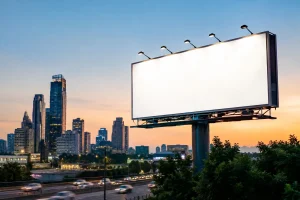
An outdoor LED billboard at a venue entrance, access road or car park needs to remain clear in changing British weather and daylight. Brightness matters, but it is only one part of the specification. The screen must also have suitable weather protection, dependable cooling, a secure mounting structure and safe access for servicing.
Roadside-facing screens require particular care. Content needs to be readable at a glance, with large type, strong contrast and no unnecessarily busy animation. Planning requirements, sightlines, driver safety and local authority considerations should be assessed early, rather than treated as a final installation detail.
For attractions near major routes, an outdoor display can establish awareness before visitors arrive. It can also provide useful live guidance on parking availability, opening times or sold-out sessions, reducing avoidable congestion at the gate.
Indoor welcome screens and digital feature walls
Indoor LED screens work well in reception areas, ticket halls, concourses and food courts, where visitors have time to absorb more detailed content. Fine-pitch LED can create a high-quality image at closer viewing distances, making it suitable for branded welcome walls, promotional video and immersive visual displays.
This is where design should follow visitor flow. A screen behind a reception desk can reinforce the brand but may not be the best place for urgent directional messages. A display at the point where guests choose between attractions, refreshments or retail can have a more immediate commercial effect.
Indoor environments are usually more controlled than outdoor sites, but they are not automatically straightforward. Ceiling heights, ambient lighting, power routes, fire safety, structural loading and access for installation all need to be considered before a screen size is agreed.
Screens for queues, waiting areas and activity zones
Queue lines can feel shorter when people are entertained or kept informed. LED signage in waiting areas can show safety instructions, event countdowns, attraction rules, promotions and entertaining content that suits the audience. It is also a practical channel for communicating changes quickly when a ride, activity or facility is temporarily unavailable.
The trade-off is that these displays are viewed close up and often from an angle. A high-resolution screen may be worthwhile, but only if the content and viewing position justify it. For simple messages seen from several metres away, specifying an excessively fine pixel pitch can add cost without delivering a meaningful benefit.
Specify the screen around viewing distance, not assumptions
Pixel pitch is the distance between pixels on an LED display. In simple terms, a smaller pitch produces a finer image at close range, while a larger pitch is commonly appropriate for viewers standing further away. It is a key decision because it influences image quality and project cost.
A venue team should map where people will stand, walk and queue before choosing a screen. Consider the closest likely viewer, the main viewing distance and whether people will see the display head-on or from the side. A screen visible from 20 metres does not need the same resolution as one in a narrow reception area where guests may stand one metre away.
Brightness should be assessed in the same practical way. Outdoor screens need the output to compete with daylight, while an overly bright indoor display can be uncomfortable and make content look harsh. Automatic brightness adjustment is valuable because it enables the display to respond to ambient conditions and helps avoid wasting energy during darker periods.
Screen size must match the architecture as well as the viewing requirement. A large display can create a memorable focal point, but it should not obstruct signage, emergency routes, access points or the character of a heritage setting. Bespoke LED systems are especially useful where standard dimensions would leave awkward gaps or fail to make effective use of a wall, column or fascia.
Build reliability into the brief
A leisure attraction runs on reputation. If a visitor-facing screen is blank during a major event or a busy school holiday, it affects more than the day’s advertising schedule. It can create confusion, increase pressure on staff and make the venue appear less well managed.
Reliability starts with equipment quality, but it also depends on the whole delivery process. A proper site survey identifies structural constraints, cable routes, network availability, sunlight exposure and safe maintenance access. It also establishes whether the screen needs a purpose-built support structure, a protective enclosure or a particular installation sequence to minimise disruption to trading.
Ask a supplier how faults are diagnosed, what warranty support includes and how replacement modules are managed. It is sensible to discuss remote monitoring, planned maintenance and the availability of spare parts before placing an order. The lowest initial quote can become expensive if the supplier cannot support the display when it matters.
For high-use sites, content management is another reliability issue. Staff need a straightforward way to update messages without risking incorrect information on screen. The system should suit the people who will operate it, whether that is a central marketing team managing several venues or an on-site manager changing offers at short notice.
Plan content before the screen goes live
An LED display is only as useful as the information it carries. Before commissioning, agree who owns content, what is scheduled each day and which messages take priority during operational changes. A screen installed for advertising can still become the most valuable communications tool on site when weather, crowd levels or an incident affects normal operations.
Keep key messages short. Use large text, clear imagery and enough time for people to read the content from the intended distance. Video can be highly effective for atmosphere and brand storytelling, but a fast-moving sequence is rarely the right choice for wayfinding, safety notices or prices.
It is worth preparing a small library of templates for recurring needs: opening information, event promotions, capacity updates, food and beverage offers, lost-child messaging and emergency communications. This protects consistency and allows teams to react quickly without producing a new design under pressure.
Choose a partner that can take responsibility for the whole job
Leisure operators are rarely looking to manage several separate contractors for design, manufacture, civils, installation, software and support. They need confidence that the proposed display will suit the site, meet its commercial purpose and be properly supported after handover.
Look for a supplier prepared to challenge an unsuitable specification, explain the cost implications clearly and carry out a detailed survey. Experience across outdoor billboards, indoor displays and complex public-facing environments is valuable because each brings different engineering, planning and operational considerations.
LEDsynergy Billboards approaches projects as bespoke systems rather than boxes to be shifted. With British manufacturing, more than 45 years of industry experience and support from consultation through to commissioning, the focus is on getting the right solution in place first time.
The most effective LED signage does not merely look modern. It helps visitors make decisions with less effort, helps staff communicate with confidence and gives the venue a dependable platform that can keep earning its place long after installation. Start with the visitor journey, be clear about the commercial objective, and let the site conditions shape the specification.
I would recommend LED Synergy to anyone considering purchasing an LED sign. We have had so many compliments since it was installed and it has been a valuable asset.
Tom Hughes
OSI Food Solutions