
Why Do LED Billboards Fail? 8 Preventable Causes
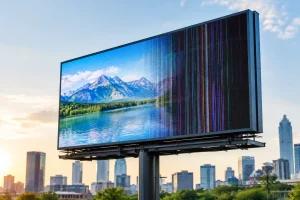
A roadside LED billboard that goes dark during a campaign does more than create an engineering call-out. It can interrupt advertising revenue, disappoint tenants or advertisers, and leave a highly visible blank space in front of customers. So, why do LED billboards fail? In most cases, the issue is not a mysterious fault within the screen. It is a mismatch between the display, its environment, the installation method and the support plan behind it.
A well-specified LED display should deliver years of reliable service. That outcome depends on decisions made long before the first image appears on screen. For property operators, venue managers and commercial buyers, understanding the common failure points makes it easier to protect a significant investment and avoid avoidable downtime.
Why do LED billboards fail in the field?
LED billboard failures rarely have one simple cause. A failed module may be the visible symptom, while the underlying issue could be heat build-up, water ingress, unstable power, poor access for maintenance or a screen that was never designed for the site.
This is why the lowest initial quotation is not always the most cost-effective choice. A display that appears comparable on a specification sheet may use different components, cabinet construction, environmental protection and control systems. It may also come without the survey, commissioning and aftercare needed to make those elements work together properly.
1. The screen is specified for the wrong environment
Indoor, sheltered outdoor and fully exposed roadside locations place very different demands on an LED billboard. An outdoor screen must handle rain, airborne dirt, temperature changes, UV exposure and wind loading. A unit intended for a protected concourse is unlikely to perform reliably when installed on an exposed façade.
Ingress protection ratings matter, but they are not the whole story. Cabinet seals, drainage paths, corrosion-resistant fixings and the way cables enter the structure all affect weather resistance. In coastal areas, salt-laden air adds another consideration. In busy urban locations, pollution and fine dust can gradually affect cooling and connections.
Brightness is equally site-specific. A screen that is too dim will look washed out in direct sunlight. One that runs excessively bright when it does not need to will consume more energy and create unnecessary heat. Automatic brightness control, correctly positioned and commissioned, helps the display respond to changing ambient light while remaining considerate to neighbours and road users.
2. Heat is not managed properly
Heat is one of the most persistent threats to LED electronics. LEDs, power supplies and control components all produce heat, and high internal temperatures accelerate component ageing. Repeated thermal cycling – warming through the day and cooling overnight – can also place stress on solder joints and connections.
Poor ventilation is often the root cause. Cabinets need a cooling approach appropriate to their design and location, whether that involves passive heat dissipation, filtered airflow or a more specialised arrangement. Simply adding fans is not always the answer: fans can draw moisture and dust into an enclosure if the system has not been engineered as a whole.
Heat problems also arise when a display is installed with insufficient clearance behind it, enclosed in an unsuitable structure or placed near other heat-generating equipment. A proper site survey identifies these constraints early, before they become expensive alterations after installation.
3. Water gets where it should not
Water ingress can cause immediate faults, but more often it creates gradual corrosion and intermittent behaviour that is difficult to diagnose. A screen may work perfectly after a dry inspection, then show module failures, flickering or communication errors during heavy rain.
The weak point is not necessarily the front of the LED cabinet. Cable glands, rear doors, joins between cabinets, mounting interfaces and unprotected connectors are all potential entry routes. Condensation can be just as damaging as rain, particularly where a cabinet is sealed without a suitable strategy for pressure and temperature changes.
Good installation practice is therefore as important as the cabinet rating. Cables must be routed and terminated correctly, seals must be checked, and the final build must allow water to drain away rather than collect around vulnerable areas. This is practical engineering, not an optional finishing detail.
4. Power quality is overlooked
An LED billboard relies on stable electrical infrastructure. Voltage fluctuations, inadequate circuits, poor earthing and electrical surges can damage power supplies and control equipment or create faults that appear sporadically.
The power requirement should be calculated for the actual display, its content profile and the surrounding equipment, with sensible allowance for peak demand. Electrical provision also needs to account for safe isolation, compliance and practical access during servicing. On larger projects, the right distribution arrangement can make fault-finding quicker and reduce the impact of a single component issue.
Surge protection is particularly valuable where equipment is exposed or supplied through long cable runs. It cannot eliminate every risk, especially during severe weather, but it is a sensible layer of protection for a high-value public-facing asset.
5. Installation and structure are treated as separate jobs
A digital billboard is not just a screen attached to a wall or frame. Its weight, wind loading, fixing points and maintenance access all need to be considered alongside the supporting structure. If responsibility is fragmented between several suppliers, important details can fall between scopes of work.
For example, a steel frame may be strong enough on paper but poorly arranged for rear access. A façade may support the display but transmit vibration. A crane lift may be planned without considering how future module replacement will be carried out. These issues do not always cause a day-one failure, but they make routine servicing harder and can shorten the life of the installation.
An end-to-end approach brings the display design, survey findings, structural requirements and installation method into one accountable plan. It also allows commissioning checks to be completed with the people who understand how the system has been built.
6. Content and control systems are neglected
Not every billboard failure is physical. A blank screen can result from a network problem, a media player fault, incorrect scheduling, a software configuration issue or a loss of communication between the control system and display.
Connectivity should be designed around the site rather than assumed. Some locations need a hardwired connection; others may require a managed mobile data solution or a local network arrangement. The chosen method should be secure, stable and realistic for the volume of content being uploaded.
Operational teams also need a clear handover. If several people can publish content, there should be simple processes for approvals, scheduling and diagnosing basic issues. Remote monitoring can provide early warning of temperature, power or communication concerns, allowing action before a minor alert becomes a visible outage.
7. Maintenance is postponed until something breaks
LED billboards are engineered products, not fit-and-forget fixtures. Preventive maintenance helps identify loosening fixings, blocked filters, degrading power supplies, cabinet seal issues and early module inconsistencies before they affect screen performance.
The appropriate inspection frequency depends on the display’s location, operating hours and exposure. A busy outdoor advertising screen in a harsh environment will need closer attention than a low-use display in a clean internal setting. What matters is having a documented plan and access arrangements that allow technicians to carry it out safely.
Spare parts strategy is also worth discussing before purchase. Matching modules, power supplies and control cards may change over time. Holding suitable spares, or working with a supplier that has a clear long-term support arrangement, reduces the time a fault remains visible.
8. The supplier disappears after commissioning
A billboard can be technically sound and still become a poor investment if support is slow, unclear or limited to a generic helpdesk. When a public display has a fault, buyers need to know who owns the issue, how it will be diagnosed and what happens if an on-site visit is required.
Warranty terms should be read alongside the practical support model. Ask what is covered, how faults are reported, whether remote diagnosis is available, and what response process applies. It is also sensible to establish who will support the software, connectivity and electrical interfaces, rather than assuming one warranty covers every part of the system.
Designing reliability into an LED billboard project
The most reliable installations begin with a detailed conversation about the site and the commercial purpose of the screen. Is the priority advertising revenue, wayfinding, brand visibility or operational messaging? Will the display run around the clock? Is it exposed to weather, positioned near homes, or expected to show highly detailed close-view content?
Those answers influence pixel pitch, brightness, cabinet design, power provision, access, connectivity and maintenance planning. There are trade-offs. A finer pixel pitch may improve viewing at short range but increase cost. Greater brightness may be necessary for a sunlit location, yet needs careful control after dark. The right answer is the one that suits the viewing distance, environment and operating model.
For buyers, the practical test is straightforward: choose a partner willing to examine the difficult details before committing to a solution. At LEDsynergy Billboards, that means treating survey, design, installation, commissioning and aftercare as connected parts of one project. A display is far more likely to keep earning its place when it has been designed for the real conditions it will face – not just for the day it is installed.

I would recommend LED Synergy to anyone considering purchasing an LED sign. We have had so many compliments since it was installed and it has been a valuable asset.
Tom Hughes
OSI Food Solutions