
What Brightness Should Outdoor Screens Be?
A screen that looks excellent in a warehouse can become unreadable outside before midday. Conversely, an over-specified display can create glare, waste energy and raise avoidable planning concerns. So, what brightness should outdoor screens be? For most commercial LED installations, the answer depends on the site, the viewing environment and how the screen will be controlled throughout the day.
Brightness is measured in nits, also called candelas per square metre (cd/m²). Higher numbers mean a brighter display. However, the objective is not simply to specify the highest possible figure. It is to deliver clear, comfortable and reliable viewing in the real conditions your audience experiences.
What Brightness Should Outdoor Screens Be in the UK?
A typical outdoor LED screen for UK commercial use is often specified between 4,500 and 7,500 nits at maximum brightness. This range gives a well-designed screen enough output to compete with daylight while allowing it to reduce brightness appropriately in overcast weather, at dusk and after dark.
Sites with prolonged direct sunlight, highly reflective surroundings or a south-facing aspect may require a higher maximum output, sometimes 8,000 nits or more. A screen installed beneath a canopy, within a transport concourse or in a shaded retail frontage may perform very well at a lower level.
The maximum specification is only one part of the decision. A properly commissioned outdoor screen should use automatic brightness control, responding to ambient light rather than operating at full output all day. This protects visual comfort, reduces power consumption and helps the display remain appropriate for its setting.
Start with the Site, Not the Specification Sheet
Two screens with the same pixel pitch and brightness rating can produce very different results when installed in different locations. Before selecting a display, it is worth assessing the physical environment in detail.
Direct sun is the obvious consideration, but it is not the only one. Glass-fronted buildings, pale paving, water, passing traffic and nearby street lighting can all affect perceived brightness. A display facing west may be easy to read for most of the day, then become challenging during low evening sun. A screen facing a busy road may need to remain highly legible from a distance, while a display serving pedestrians outside a leisure venue can be designed for closer viewing and lower output.
Viewing angle matters too. LED screens are not judged only from directly in front. A digital billboard may need to work for drivers approaching from an angle, pedestrians crossing a plaza and visitors looking down from nearby offices. The right solution considers the whole viewing zone, not a single point on a site plan.
A thorough site survey should identify sun paths, likely dwell times, sightlines, mounting height, local illumination and the nearest sensitive properties. This is where experienced design and installation support pays for itself. It prevents the common mistake of choosing a standard product first and trying to make it fit later.
Why Maximum Nits Are Not the Whole Story
A high-nit figure can be useful, particularly for a large roadside or open-air advertising screen. Yet brightness alone does not guarantee a good image. Contrast, LED quality, calibration, cabinet design and content all influence how visible a display feels.
Contrast is particularly important in daylight. A screen needs to reproduce dark tones convincingly as well as produce bright whites and colours. If black areas look grey in strong ambient light, imagery can appear washed out even when the display has a high stated brightness.
Uniformity also matters. On a large-format screen, uneven panels, inconsistent colour temperature or poorly calibrated modules are immediately noticeable. Buyers should look beyond the headline number and ask how the display is tested, calibrated and maintained over its working life.
Content can either support or undermine the investment. Outdoor creative should use clear contrast, large type, uncluttered layouts and purposeful motion. Fine detail that looks attractive on a laptop often disappears at roadside viewing distances. A well-managed 5,000-nit screen with suitable content can be more effective than a brighter display carrying artwork that nobody can read.
Automatic Dimming Is Essential
An outdoor screen should be capable of maximum brightness in the middle of a bright day, but it should not remain there as light levels fall. Automatic dimming uses one or more light sensors to adjust output according to ambient conditions.
This is essential for safety and audience comfort. A display that is appropriate at 1pm can feel harsh at 9pm, particularly near homes, public roads, car parks or hospitality settings. A carefully set dimming profile gives the screen enough presence without becoming a distraction.
It also has practical benefits. Lower output during darker periods reduces energy use and can help extend the useful life of LED components. For businesses operating screens over long hours, this can make a meaningful difference to running costs.
Automatic control should be supported by sensible commissioning. The system needs suitable day and night limits for the location, and staff should be able to review and adjust settings where site conditions change. Seasonal differences are relevant in the UK: a configuration that is comfortable during summer evenings may need attention during long, dark winter afternoons.
Brightness, Planning and Local Considerations
Outdoor digital displays need to be considered in the context of planning, highways safety and neighbouring properties. There is no single brightness setting that is right for every council area or every application. Requirements can vary according to location, proximity to residential properties, traffic conditions, screen size, operating hours and the nature of displayed content.
For that reason, brightness should form part of the project conversation from the outset, rather than becoming a late technical detail. A supplier should be able to explain the proposed maximum output, dimming controls and how the screen will be managed after installation. Clear technical information helps decision-makers, planning teams and stakeholders understand that the display will be visible when required without creating unnecessary impact.
Where a screen is close to a highway, it is especially important to consider driver attention. Brightness is only one factor. Animation, change frequency, location, viewing time and sightline all require careful thought. The strongest schemes are designed around the setting rather than forced into it.
Different Outdoor Uses Need Different Brightness Levels
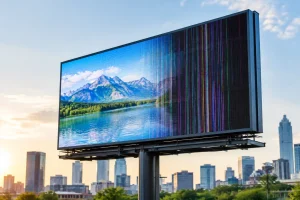
A roadside digital billboard usually needs strong daylight performance because it competes with open sky, vehicle reflections and fast-moving traffic. It may therefore sit towards the upper end of the typical outdoor brightness range, with automatic reduction at lower light levels.
Retail park and shopping centre displays often face a more controlled environment. They still need to be visible in daylight, but shaded walkways, façade lighting and closer pedestrian viewing can alter the requirement. In these locations, image quality and content clarity may be as significant as maximum nits.
Screens at sports venues, leisure attractions and transport hubs have their own patterns of use. A stadium display may operate around event schedules and large crowds. A station screen may need comfortable legibility from early morning to late evening. In each case, the screen should be designed around audience behaviour, operating hours and the level of ambient light present on site.
Questions to Ask Before You Buy
When comparing outdoor LED display proposals, ask what brightness is available at maximum output, but also ask how it is controlled. A good proposal should explain the recommended operating range for your site, the type and placement of light sensors, the dimming settings available and how the system can be monitored after handover.
It is also sensible to ask about image calibration, weather protection, heat management and maintenance access. Brightness generates heat and places demands on power systems, so the display enclosure and installation design must be engineered accordingly. The right screen is one that performs consistently through bright summer days, heavy rain, frost and the long operating hours expected of a commercial asset.
At LEDsynergy Billboards, we approach brightness as part of the wider screen design, not an isolated figure on a quotation. The goal is to specify an outdoor display that is visible, appropriate and dependable for the location, while giving clients practical control over how it operates.
The most useful question is not simply how bright a screen can be. It is whether it will remain clear, comfortable and commercially effective at every hour your audience is there to see it.

I would recommend LED Synergy to anyone considering purchasing an LED sign. We have had so many compliments since it was installed and it has been a valuable asset.
Tom Hughes
OSI Food Solutions