
How to Plan Digital Screen Installation
A digital screen project usually looks straightforward until the practical questions start. Can the structure take the weight? Is the viewing distance right for the pixel pitch? Where is the power coming from, and who is responsible for the data connection? If you are working out how to plan digital screen installation, the difference between a smooth rollout and an expensive headache is nearly always decided before the screen is ever built.
For buyers responsible for public-facing sites, the planning stage is where risk is reduced, budgets are protected and performance is set up properly. A good screen in the wrong location, with the wrong specification or poor supporting infrastructure, will never deliver the commercial return it should. That is why experienced suppliers spend as much time asking questions at the start as they do manufacturing and installing the system itself.
How to plan digital screen installation from the outset
The first job is to be clear about what the screen needs to achieve. That sounds obvious, but it is where many projects lose direction. A roadside advertising display has very different requirements from a retail fasica screen, an internal shopping centre display or a transport information screen. The audience, dwell time, ambient light, content type and operating hours all affect the right solution.
If the goal is advertising revenue, screen position and visibility will matter as much as image quality. If the screen is primarily for customer information, legibility and content scheduling may be the priority. If the display is part of a wider estate upgrade, consistency, remote management and ongoing support may carry more weight. It is far easier to specify correctly when the operational and commercial purpose is settled early.
Budget setting also needs a realistic view. The screen itself is only one part of the investment. Structural works, access equipment, electrical supply, data provision, civils, permissions, content software and maintenance planning can all sit around the core hardware cost. A dependable supplier should be transparent about this from the start, because a lower upfront figure can quickly become poor value if key elements have been left out.
Start with the site, not the screen
A proper site survey should come before final product selection. This is where planning becomes practical. On paper, a location may appear ideal, but the physical environment often tells a different story. Sightlines may be partially blocked. Sunlight may wash out content at key times of day. Existing structures may limit fixing options. Access for installation and future maintenance may be more difficult than expected.
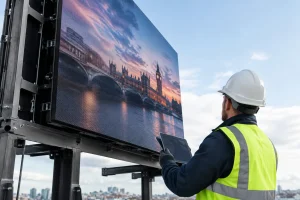
For outdoor projects in particular, wind loading, exposure, drainage and the condition of the mounting surface must be assessed carefully. A bespoke LED billboard screen is a substantial piece of equipment, and the supporting structure needs to be designed for the environment it will face over many years. That applies whether the screen is mounted to a building, installed on a freestanding steel structure or integrated into a more complex architectural setting.
Inside a venue, the challenges are different but no less important. Ceiling heights, internal reflections, proximity to viewers, fire safety considerations and integration with existing services all need attention. The right answer for a shopping centre entrance may be entirely wrong for a leisure venue concourse.
Choosing the right screen specification
Once the site conditions are properly understood, the specification becomes much easier to define. This is where buyers can benefit from a consultative approach rather than being pushed towards a standard product.
Pixel pitch is one of the best examples. Smaller pixel pitch generally gives a sharper image at closer viewing distances, but it also increases cost. There is little value in paying for a very fine pitch on a large roadside screen viewed mainly from a distance. Equally, choosing too coarse a pitch for a screen seen up close can make content look poor and undermine the whole investment. The correct pitch depends on viewing distance, application and budget.
Brightness is another area where balance matters. Outdoor screens need sufficient brightness to remain effective in direct daylight, but specification should be appropriate to the site and content. Too little brightness causes visibility issues. Too much, without proper control, can create compliance concerns and irritate nearby occupants or road users. Good planning includes automatic brightness adjustment and sensible calibration.
Screen size and aspect ratio also deserve more thought than many projects give them. Content that is constantly being cropped, reformatted or poorly scaled is a sign that the planning was not joined up. The physical display should suit the content strategy, not fight against it.
Power, data and control requirements
One of the most common reasons for delay is underestimating the supporting infrastructure. A digital screen may be the headline item, but it relies on dependable power and communications to do its job.
Electrical provision should be confirmed early, including load capacity, cable routes, isolation requirements and any upgrade works. For larger outdoor displays, this can be a significant part of the project. Data requirements also need clarity. Some sites can use existing network infrastructure, while others are better served by dedicated connectivity such as 4G or 5G solutions. The right choice depends on location, security requirements, remote management needs and how content will be updated.
Control equipment needs a suitable environment too. Housing, ventilation, weather protection and secure access all matter. If these details are treated as afterthoughts, reliability usually suffers later.
Permissions, compliance and project coordination
When considering how to plan digital screen installation, permissions should be addressed early rather than once the hardware is ready. Depending on the site and application, that may include planning consent, landlord approval, highways considerations, structural sign-off and electrical compliance. In some sectors, there may also be internal brand, safety or IT governance to work through.
This part of the process can take time, especially on multi-stakeholder sites such as retail parks, transport environments and commercial estates. A supplier with installation experience can help identify the likely requirements at the start, which helps avoid costly redesigns or programme slippage.
Coordination matters just as much as compliance. Who is arranging civils? Who is responsible for access equipment? When are power works taking place? Who signs off the content management system? A project can have the right product and still go wrong if responsibilities are unclear. The most dependable installations tend to come from programmes where design, manufacture, delivery and commissioning are joined up from day one.
Content planning is part of installation planning
A screen is only as effective as what appears on it. That is why content should not be left until the installation date is in the diary. Screen resolution, orientation, message duration, scheduling and remote update processes all need to be considered before commissioning.
For advertising screens, this means thinking about how campaigns will be sold, booked and rotated. For operational displays, it means understanding who will update messages, how quickly information needs to change and what happens if connectivity is interrupted. A technically excellent screen with a weak content workflow soon becomes underused.
This is also where software choice matters. Some organisations need straightforward scheduling for one or two sites. Others need centralised control across multiple locations, with user permissions and reporting. There is no single right answer, only the right fit for the way the display will be managed.
Plan for maintenance before the first switch-on
Reliable digital signage is not accidental. It comes from sensible product design, proper installation and a realistic support plan. Buyers sometimes focus heavily on capital cost and leave maintenance for later, but that usually proves false economy.
Ask practical questions. How will the screen be accessed for service? Are components front or rear serviceable? What is covered by warranty? How quickly can support be provided if there is a fault? What level of preventative maintenance is recommended for the site conditions? These points are especially important for high-profile screens where downtime affects revenue, reputation or tenant satisfaction.
A well-planned installation should make future support straightforward rather than awkward. That is one reason many clients prefer an end-to-end delivery model. When the same specialist team understands the design, build and installation from the start, faults are easier to prevent and easier to resolve if they do occur. For organisations investing in a bespoke display, that accountability has real value.
The benefit of getting it right first time
Digital screen projects are rarely off-the-shelf purchases, especially in commercial environments where visibility, durability and return on investment matter. The strongest outcomes come from planning that is honest about the site, realistic about infrastructure and clear about commercial purpose.
At LEDsynergy Billboards, that is why projects begin with questions rather than assumptions. A screen should fit the site, the audience and the business case, not simply a product catalogue. When you plan thoroughly at the start, installation becomes more predictable, performance improves and the screen is far more likely to deliver value for years rather than months.
If you are weighing up a new display, take the time to plan the whole system, not just the screen itself. That is usually where the best decisions are made.

I would recommend LED Synergy to anyone considering purchasing an LED sign. We have had so many compliments since it was installed and it has been a valuable asset.
Tom Hughes
OSI Food Solutions